


It’s Monday, June 22. This is The Front Page, your daily window into the world of The Free Press—and our take on the world at large. Today: J.D. Vance leads negotiations in Switzerland, and Caitlin Flanagan and Robert P. George dig into what really drives the vice president. Suzy Weiss names her Great Americans pick: Lil Peep. Charlotte Grinberg says we should let the kids eat peanuts. And much more.
But first: Introducing The Honesty Project.
What do Americans truly believe? It turns out nobody really has a firm grasp.
That’s because the typical methods of finding out—polls, surveys, focus groups—all have a serious flaw: They tend to elicit less-than-honest answers. As a result, shallow spasms of groupthink are often mistaken for deep shifts in the popular will. And real, slow-moving changes in American values are often missed entirely, until they manifest themselves in radical new political movements.
We at The Free Press want to shine some light into the shadowy corners of Americans’ private views. So, to try to get a more accurate sense of what Americans believe, we partnered with Populace, a Boston-based think tank that developed a method of gauging respondents’ “private” opinions on sensitive topics. From now through November, we’ll publish a series of polls designed to deliver a better representation of what your neighbors think of the biggest issues of the day. We’re calling it The Honesty Project.
The stakes of the initiative are self-evident: According to our first poll, 28 percent of Generation Z publicly believe that violence may be necessary to save the country. In private, that number rises to 39 percent.
It is core to The Free Press to explore what Americans actually think about the most important issues in public life. This work depends in part on an accurate understanding of what our neighbors believe. That’s the purpose of the Honesty Project: To understand how frayed America’s civic fabric actually is, and in doing so, take the first step toward fixing it.
Read our editorial on the mission driving this project. And explore the results of our first survey to understand what Americans think about a range of issues, including our faith in American democracy—and in one another.
—The Editors

J.D. Vance, the Politician and the Man
On Sunday, Vice President J.D. Vance stepped into a role that could define his 2028 presidential campaign: leading U.S.-Iran peace talks in Switzerland.
The negotiations followed Iran’s Saturday announcement that it had once again closed the Strait of Hormuz, prompting President Donald Trump to warn Tehran: “You close it and you won’t have a country.” Vance emerged from the negotiations saying “great progress” had been made, though the Iranian delegation appeared less than enthused.
It’s only the latest illustration of Vance’s tenuous position inside the administration. Last week, Eli Lake examined how the vice president has spent days trying to sell the Iran deal to a fractured Republican coalition, split between hawks who see it as a form of American capitulation, and anti-interventionists who opposed the war from the start. The piece is a revealing look at how the vice president is viewed by his party—and the world.
But what actually drives J.D. Vance? For that, we turn to the man himself. Last Tuesday, the vice president published his second memoir, Communion, tracing his journey from a poverty-stricken childhood steeped in evangelical Protestantism, through years of atheism, to his eventual embrace of Catholicism.
Caitlin Flanagan is unconvinced by the self-portrait. Communion has the form of a pre-campaign memoir, she argues, but little of its substance: “There’s no grand vision for America, no charge for renewal.” Vance casts himself as a “Christian statesman,” yet seems perpetually frustrated by the Church’s criticism of his political agenda. In her piece today, she explains why Vance’s understanding of himself collides with the world’s—and with Catholicism.
Princeton professor Robert P. George sees something else entirely. At its core, he writes, Communion is the story of a kid from the Ohio Rust Belt who clawed his way to Yale Law School, only to discover that status alone could never provide meaning. “What I came away from the book confidently thinking is that J.D. Vance was a troubled kid who wanted to lead a meaningful life,” George writes. Read George on what Vance’s conversion story reveals about the man behind the politician.

For decades, parents were told to keep allergens like peanuts and eggs away from babies. That advice fit nicely with modern parenting instincts to shield children from risk—but science now says the very opposite. In her piece today, Dr. Charlotte Grinberg explains why early, repeated exposure to allergens is actually the smarter path: “The immune system is not always made safer by avoidance,” she writes. “Sometimes it is made wiser by encounter.”

Free Press columnist Caitlin Flanagan spent 35 years in Los Angeles, fell in love with it, and watched it become something she no longer recognized. On the latest episode of Conversations with Coleman, she discusses what the homelessness crisis, the Palisades fire, and the city’s dysfunction reveal about progressive politics—and why, despite everything, she still believes having children is the most meaningful thing a person can do with his or her life.
Great Americans
Our latest Great American is none other than Lil Peep—the Long Island rapper who fused emo music and trap rap, two things that weren’t supposed to go together, and made something entirely his own. His story, Suzy Weiss argues, is so totally American: a freak and an outcast who took advantage of a new technology to make his art, moved to California, and gave himself a new name. “Whatever he was wearing, or saying, or intimating,” Suzy writes, “it was like he invented it. And isn’t that what a rock star is?”
MORE FROM THE FREE PRESS
THE NEWS
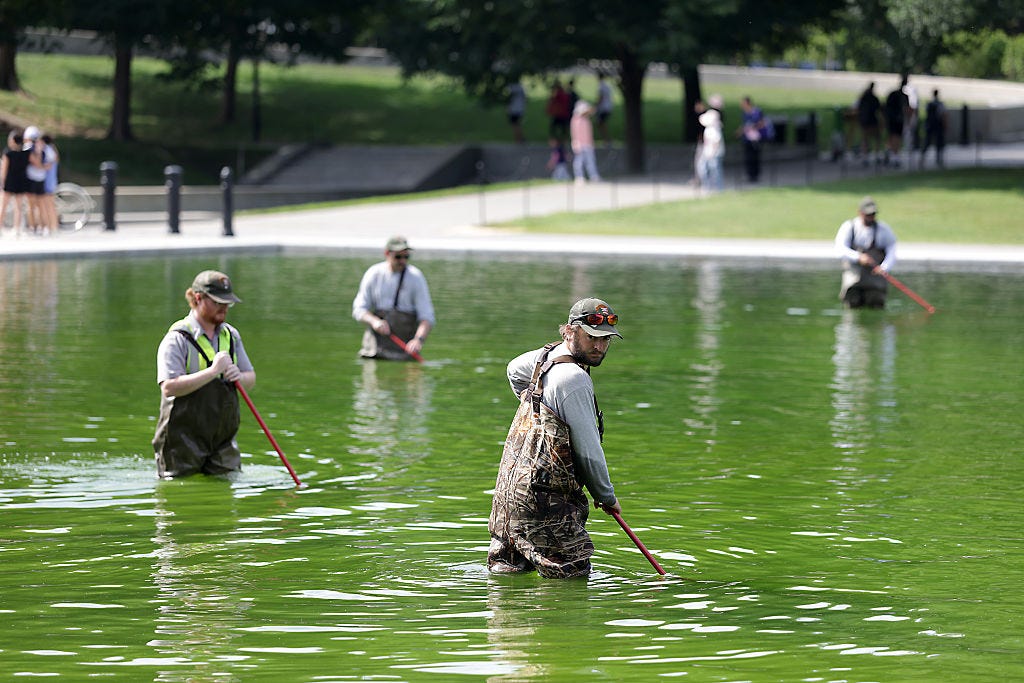
Trump said Saturday the Lincoln Memorial Reflecting Pool, which just underwent a $14 million renovation, will likely need to be drained for repairs after its newly painted floor began peeling and algae spread across the water. The president blamed vandals for the damage and said those responsible could face years in prison.
Russian-occupied Crimea halted civilian gas sales Sunday after Ukrainian strikes on fuel infrastructure killed four people and triggered the region’s worst energy crisis since Russia’s 2014 annexation.
British prime minister Keir Starmer is facing growing calls to resign from within his own Labour Party, with one senior member of the party saying he has “absolutely no authority” left. Andy Burnham, the popular former mayor of Greater Manchester, is widely seen as his likely successor after winning a special election last week.
The Federal Aviation Administration is investigating a near-collision at Boston Logan Airport on Saturday, after a Delta flight aborted its landing to avoid an American Airlines plane taking off from an intersecting runway.
A Spanish judge ruled that Begoña Gómez, wife of the prime minister Pedro Sánchez, will stand trial on corruption charges and has been barred from leaving the country. She is accused of using her proximity to power to secure public contracts—part of a widening web of investigations that have put Sánchez’s circle under scrutiny.
The U.S. men’s national soccer team advanced to the World Cup knockout round as group winners Friday, shutting out Australia 2–0 without injured star Christian Pulisic. It’s the first time the Americans have topped their group since 2010. They close out group play against Turkey on Thursday before their round-of-32 match on July 1.

The FP says -- "British prime minister Keir Starmer is facing growing calls to resign from within his own Labour Party, with one senior member of the party saying he has “absolutely no authority” left."
Great prediction. He just resigned!
The Honesty project doesn’t look at the bias of a Bostonian think tank or the organizers of polls? The unacknowledged bias of liberal questioners causes the savvy answerers to skew their replies.