


It’s Tuesday, March 31. This is The Front Page, your daily window into the world of The Free Press—and our take on the world at large. Today: Aaron MacLean on the coming Battle of Hormuz. Freya India on why social media age-verification laws are the wrong fix for the right problem. Eli Lake asks: Is Trump a negotiating genius or a mad king? And much more.
But first: Could GOP infighting turn Texas blue?
Just like everything else, soul-crushing delusions are bigger in Texas. That’s the only way to make sense of Democrats’ recurring dream of taking control of the Lone Star State. Their goal of turning Texas blue is always just out of reach.
This year they’re dreaming about James Talarico, the young state representative and aspiring preacher who they’ve nominated for Senate. You may recognize Talarico from the wall-to-wall coverage he’s received since his upset primary victory earlier this month. Talarico’s views are progressive, from transgender rights to abortion, yet Democrats hope his Christian identity and down-to-earth speaking style will help him win over conservative Texans.
But that dream is missing half the story. Democrats have a great chance to win a Senate seat in Texas for the first time in three decades, but it won’t be because any candidate of theirs wooed voters toward progressive values.
Instead, the Senate race may be decided in May, when Republican voters choose whether to nominate sitting senator John Cornyn or his challenger, Ken Paxton, the scandal-ridden state attorney general. If he becomes the nominee, Paxton may pull off what no Democrat could—turning Texas away from the GOP. I break down those dynamics in my look at the race.
No one knows the stakes better than Phil Gramm, who served for 17 years in the Senate seat that’s now up for grabs. In both the GOP runoff and the general election, voters will help determine control of the Senate and whether Texas stays red. But Gramm also sees a choice more important than that—between a government that builds a better life for Americans, and one in which lawmakers do nothing but protest as the country declines.
—Mene Ukueberuwa

War in Iran: The Latest
One month into the U.S.-Israeli war on Iran, there is no ceasefire in sight and the gap is widening between what Washington and Tehran are saying publicly about the prospect of a deal.
All that means the Battle of Hormuz is coming, writes Aaron MacLean, whether Donald Trump wants it or not. As the president hints at negotiations, ground troops are preparing for escalation. That’s because, at the end of the day, “leaving Tehran in effective control of the Strait is simply not strategically feasible.” Read Aaron on what that fight might look like—including whether it could involve ground troops.
There’s another factor when it comes to the Strait, and the war more generally: China. On today’s episode of School of War, Aaron interviews national security and China expert Eyck Freymann on Beijing’s role in this war, its strategic interests in the Middle East and beyond, and how the U.S. can deter aggression toward Taiwan.
What does Trump want to happen next? The president’s public statements on the war in recent days have been confusing. For his fans, this is the art of the deal on steroids. To his haters, it’s evidence that the commander in chief is a mad king.
Eli Lake offers a third explanation, in his latest report on the U.S. strategy. Read his piece on how Trump’s doing it, whether he can pull it off, and what relations with “a new and more reasonable regime” would actually look like.
And don’t miss the latest episode of Breaking History with Haviv Rettig Gur for a deep dive into the “resistance” ideology of the Islamic Republic and why it embraces sacrificing society to outlast its enemies.
Finally, don’t miss Rafaela Siewert’s interview with Mohsen Sazegara, who helped found the Islamic Revolutionary Guard Corps—and then turned against it. Few people have had such an intimate view of a regime that continues to fascinate and horrify the world, and even fewer have experienced such a dramatic and consequential transformation. Today, Sazegara sat down with Rafaela to discuss his conversion from a revolutionary to dissident.


Last week, a jury found Meta negligent for designing addictive platforms that could harm young users, but the cure might be worse than the disease. Freya India has been warning about the harm done to young women by social media for years, but now she is worried that proposed fixes like age verification and increased surveillance may create new problems. Read Freya on why, “in trying to keep a generation safe from harm the state will attempt to turn us all into something harmless.”

MORE FROM THE FREE PRESS


THE NEWS
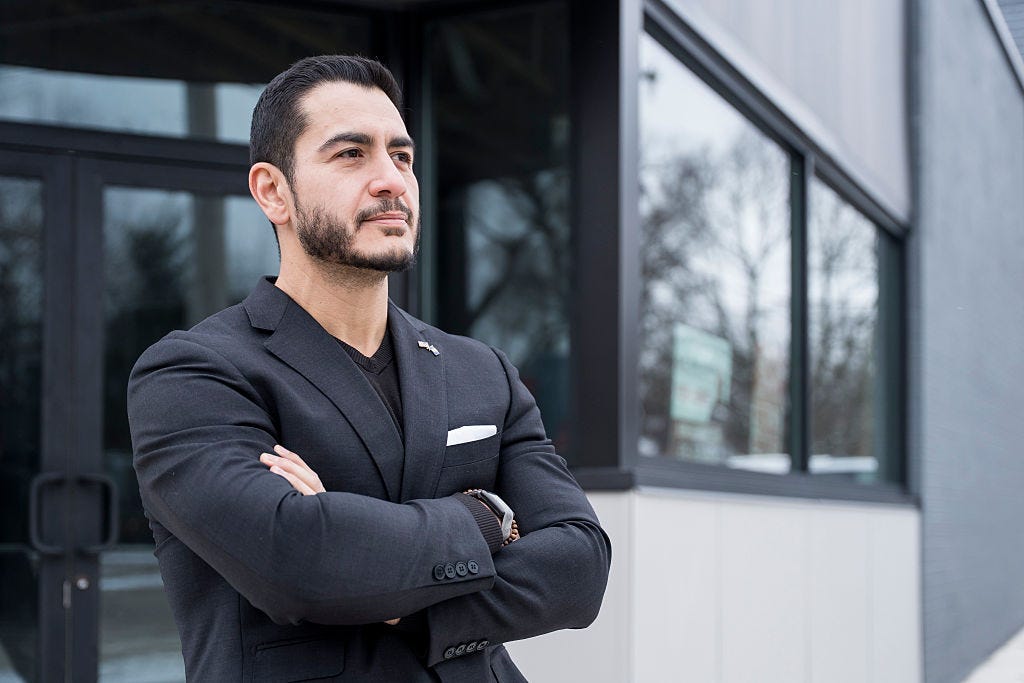
Leaked audio from a private campaign strategy call with Democratic Michigan Senate candidate Abdul El-Sayed and his staff revealed a plan to keep mum on the February assassination of Ayatollah Ali Khamenei because “there are a lot of people in Dearborn who are sad,” The Washington Free Beacon reported yesterday. If journalists pressed him to take a stance, El-Sayed said on the call that he would try to distract them by highlighting Donald Trump’s ties to Jeffrey Epstein.
A majority of American Jews—55 percent—oppose the war in Iran, compared to 61 percent of all Americans, according to new polling data. The poll found that even among those who support the war, nearly one third think President Donald Trump should have asked Congress for approval first.
Air Canada’s CEO, Michael Rousseau, stepped down yesterday after facing criticism for issuing his condolence message after last week’s fatal LaGuardia runway crash almost entirely in English. Rousseau’s statement contained just two French words—bonjour and merci. The Canadian air carrier said it will strongly emphasize fluency in French when choosing his replacement.
Match Group, which owns dating apps Tinder and OkCupid, settled a lawsuit yesterday with the Federal Trade Commission over accusations that it shared user photo data and other personal information with a third-party company developing AI-powered facial recognition technology. Match neither admitted nor denied wrongdoing and did not receive a monetary penalty.
The Israeli military pulled a battalion of reserve soldiers from active duty in the West Bank yesterday after one soldier told a CNN journalist on camera that troops were motivated by “revenge” against Palestinians. IDF chief of staff Eyal Zamir called the situation a “grave ethical incident” in a statement yesterday, clarifying that “weapons are to be used solely for the purpose of carrying out the mission, and never for revenge.”
Gunmen killed at least 30 people in a suspected terror attack on a university community in Nigeria’s Plateau state on Sunday night, after which the local government imposed a 48-hour curfew in the district. President Trump re-designated Nigeria a “country of particular concern” last November on account of rising violence against Christians, though it is unclear whether the perpetrators of the latest attack, which took place on Palm Sunday, targeted victims for their faith.

So now soldiers can’t have revenge as a motive? Was Moses strictly sticking to the mission when he caused the Red Sea to annihilate the Egyptian army? How would CNN have handled that one, BTW?
"Air Canada’s CEO, Michael Rousseau, stepped down yesterday after facing criticism for issuing his condolence message after last week’s fatal LaGuardia runway crash almost entirely in English."
O Canada...