


It’s Thursday, June 4. This is The Front Page, your daily window into the world of The Free Press—and our take on the world at large. Today: What was Candace Owens up to in Moscow? An AI founder on why AI won’t take your programming job. Jon Meacham on the novel that explains America. And much more.
But first: Frannie Block on why she’s still following the Qatari money.
I started covering Qatari influence campaigns in the United States because of a map.
The map, which hung in a public elementary school in Brooklyn, depicted the “Arab world”—only Israel wasn’t on it. The classroom in which it hung, I uncovered, was funded by a nonprofit called Qatar Foundation International, run by the wife of Qatar’s emir. It turns out, in a four-year time span, QFI had given over $1 million to the New York City Department of Education.
Yesterday, QFI reportedly announced it would be “winding down” its operations—perhaps a sign that the Gulf country is wary of scrutiny as more people ask, “Why is this tiny, oil-rich country in the Gulf spending so much money in America?”
My colleague Jay Solomon and I spent months trying to understand just how much Qatari money was making its way into American life. The investigation we published last year revealed nearly $100 billion of Qatari investments in key American industries, including education and defense—and exposed how Qatar sought to curry favor with politicians and the American public on both sides of the aisle.
But widen the lens and the issue only grows in size. Today, a new report by the Foundation for Defense of Democracies tallies more than $400 billion in Qatari spending in the U.S. since 2010. The list goes on and on—each example another reason for worry and outrage about Qatar’s influence over American life. Read my story for the latest developments on one of the most overlooked stories in the country.
—Frannie Block


A retired Army doctor who once testified on behalf of a convicted terrorist just won a Democratic primary in New Jersey, and is likely headed to Congress. Audrey Fahlberg reports on Adam Hamawy’s past and how Democratic leaders are responding. “The idea that we’ve expanded the tent to the point that we’re putting people in that clearly are not in line with our values,” one Democratic congressman told her, “is a real long-term mistake.”

As Russia launched one of its largest attacks on Ukraine in recent months, Candace Owens was in Moscow posting online about the glories of Russian life. What she forgot to mention was that she was there to speak at a Kremlin-backed economic forum, rubbing elbows with Vladimir Putin’s most loyal propagandists. What was she doing there? And what does the trip say about the Kremlin’s reach across the American right? Park MacDougald offers answers to those questions in his story on how American podcasters became Kremlin cheerleaders.

Hoan Ton-That, founder of Clearview AI, is having the most fun he’s ever had, and it’s all thanks to AI coding tools. The lifelong software engineer argues that the companies warning you about AI taking your programming job are wrong. His fellow coders aren’t going to be obsolete, he predicts. “Each time a tool made a job easier, we didn’t run out of things to do,” he writes. “We found bigger things to do.”

In the latest episode of Old School, Shilo Brooks sits down with Pulitzer Prize–winning historian Jon Meacham to discuss Herman Wouk’s epic novel “The Winds of War,” what it reveals about American character, and the books and events every citizen should know to better understand our country.
For the latest installment of our new Great Americans series, Daniel Akst tells the story of Elisha Otis—the Vermont farm boy who made the American skyscraper possible. Before Otis, elevators could plummet if their ropes snapped. His invention, the safety hoist, fixed that. Otis, Daniel writes, “embodied a country hell-bent to build.” Read his piece on the man who gave America its skyline.


MORE FROM THE FREE PRESS

In Tuesday’s primaries in California, the outsiders were on the rise: Republican Steve Hilton vaulted to the top of the governor’s race with nearly 28 percent of the vote, ahead of expected front-runner Xavier Becerra. And in Los Angeles, former reality star Spencer Pratt looks set to finish second in the mayor’s race, edging out far-left city councilmember Nithya Raman and setting up a fight with incumbent Karen Bass. What do the results say about the state of the Golden State? That’s the subject of today’s Big Read, by Peter Savodnik.

Yesterday, Californians went to the polls in primaries that could change the face of the state.

Is artificial intelligence a blessing or a curse? It may be one of the defining questions of the 21st century. AI promises extraordinary benefits, from medical breakthroughs to unprecedented economic growth. But its development also carries profound risks for the financial and geopolitical landscape—and shows no signs of slowing down. On Monday, Anthropic
THE NEWS
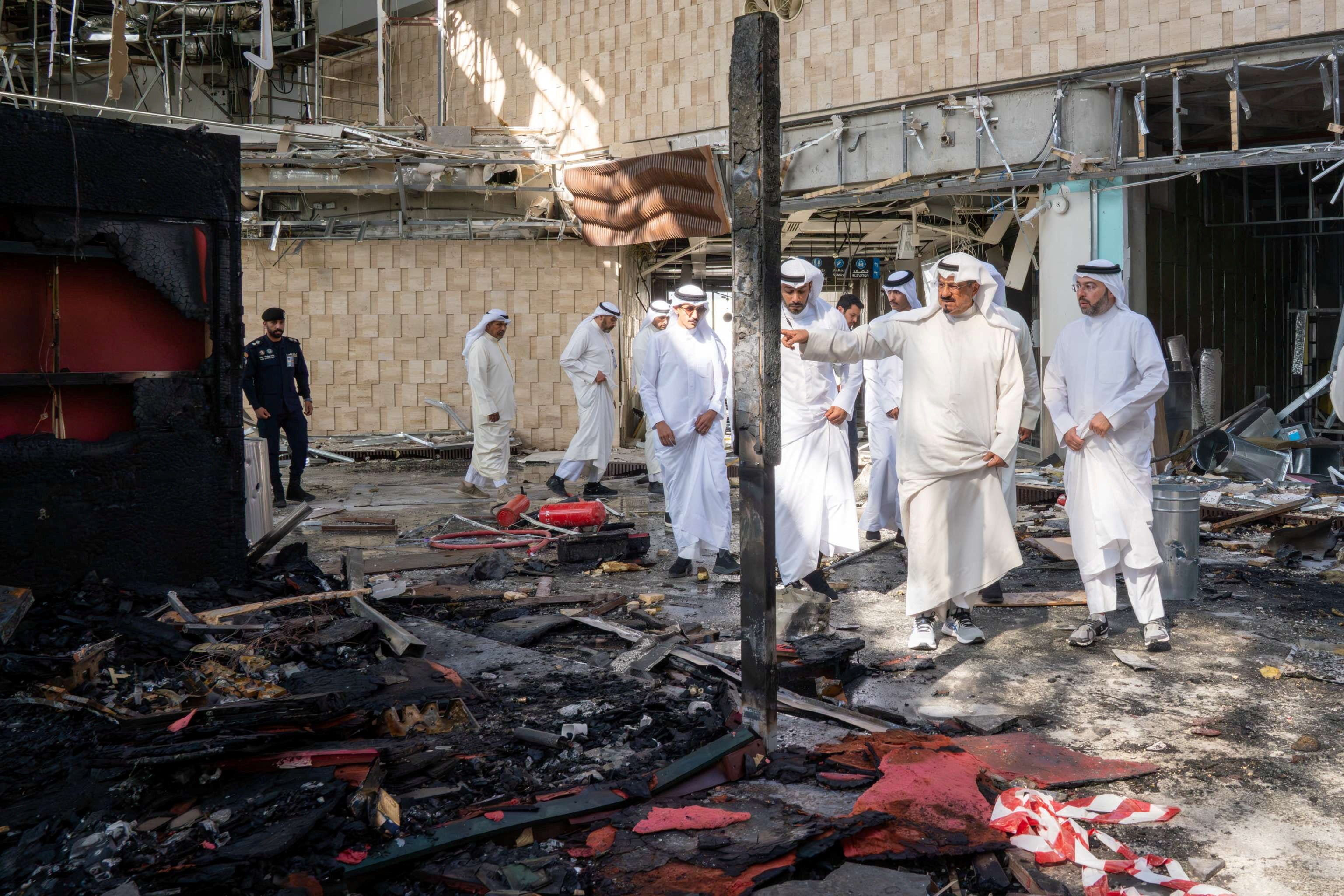
Iran struck Kuwait’s main international airport yesterday, killing one and injuring dozens, just two days after the terminal had reopened after a monthslong closure amid the war. Iran denied responsibility, claiming the damage was caused by a U.S. interceptor—a claim U.S. Central Command firmly rejected.
Israel and Lebanon agreed to a new ceasefire Wednesday following U.S.-brokered talks in Washington. The deal requires Hezbollah to withdraw its forces from southern Lebanon. A previous deal struck in April failed to stop the fighting.
The House passed a resolution to curtail Trump’s war powers in Iran, with four Republicans breaking ranks to hand Democrats a rare bipartisan rebuke of the president. The measure still needs Senate approval, but the vote signals growing unease in Congress over a war that has stretched past the 60-day limit requiring Congressional authorization.
Senate Republicans advanced their immigration funding bill to fund ICE and Border Patrol Tuesday after dropping taxpayer money for Trump’s White House ballroom and acting Attorney General Todd Blanche abandoning a $1.8 billion “anti-weaponization” fund that would compensate some January 6 convicts.
SpaceX is planning a $75 billion IPO at $135 per share that would value Elon Musk’s rocket company at $1.75 trillion—likely making it the largest public offering in history. The stock is set to debut on the NASDAQ on June 12.
After a 15-hour standoff, the FBI shot and killed a suspect who had barricaded himself with 10 hostages yesterday inside an office building in Bakersfield, California. The man claimed to have explosives strapped to himself and some of the hostages. Officials did not give a motive, and all 10 victims were released unharmed.
Maine Senate candidate Graham Platner met with Democratic senators this week to assure them no further scandals were coming after reports emerged that he sent sexually explicit messages to other women while married. “The worst of the rumors we’ve all heard are not true,” Platner told the group, though many in the party remain uneasy with the primary just a week away.
NASA officially pulled the plug on Maven, its Mars-orbiting spacecraft, after six months of silence. It went dark in December after passing behind the planet, apparently entering a spin that knocked it off course and depleted its batteries.

I know that California looks like a democracy to many of you.
In the general election in California, Steve Hilton will get about 40% of the vote and lose. It will be considered a good result for a Republican.
The nearly dead and the comatose in convalescent hospitals in California are voted Democrat by SEIU. I have seen it myself. By myself, I can not out vote an entirely rest home.
Mail-in ballots are also 'harvested' in California. Our elections have become 'problematic'.
The Qatar problem here is a forerunner of jihadists taking over Europe. Do the Board of Education and teachers have any brains???