


“If you’re in this room, all your family and friends think you’re crazy,” the host calls out.
It’s Wednesday night and, along with over 1,300 others (the line wrapped around an entire block), I’m at New York City’s inaugural ClawCon. Here, passionate fans of the personalized AI agent OpenClaw can meet each other and, among other things, chat about all the ways they love it. Launched in November under the name Clawdbot, then changed to Moltbot in January and finally OpenClaw, it can do everything from organize your email to set your alarms to even set up an options trading portfolio.
The host is Michael Galpert, a mega-fan of the product, who has come all the way from San Francisco. “Everyone’s here because we’re ready to ride the claw,” he said. “It’s not normal for the rest of the world. So it’s going to be on us to help shepherd that new era that has already started.”
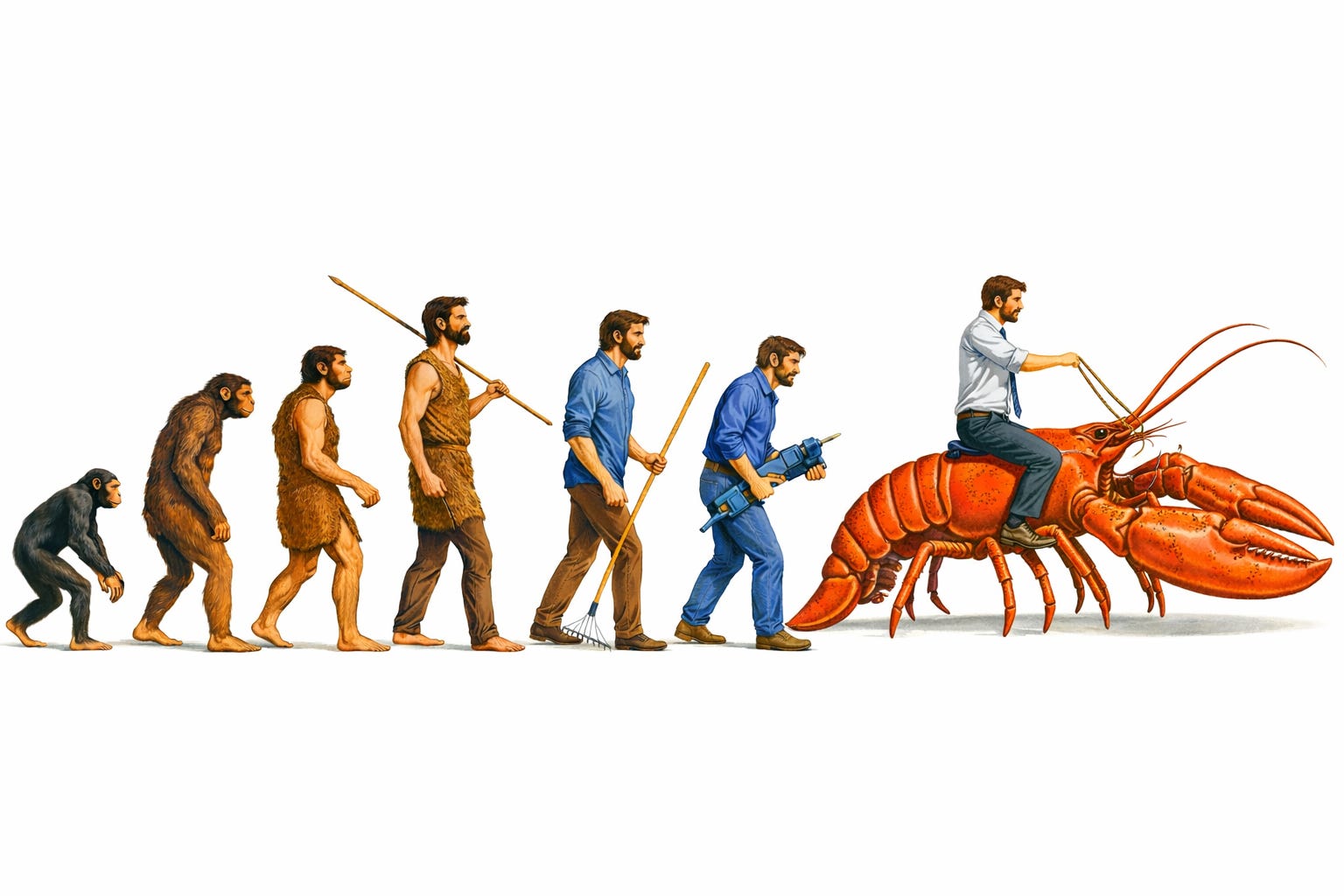
In the past two months, OpenClaw has taken the AI world by storm: What started as a self-described “weekend project”—the brainchild of an Austrian man named Peter Steinberger—drew two million visitors in a single week, charted unprecedented growth on GitHub, and eventually earned Steinberger a shiny new job at OpenAI. In January, OpenClaw went viral when a man named Matt Schlicht created a social media platform for its bots called Moltbook, where the AI agents could talk to one another; soon after, the bots used that network to sprout “Crustafarianism,” a religion complete with its own five tenets.
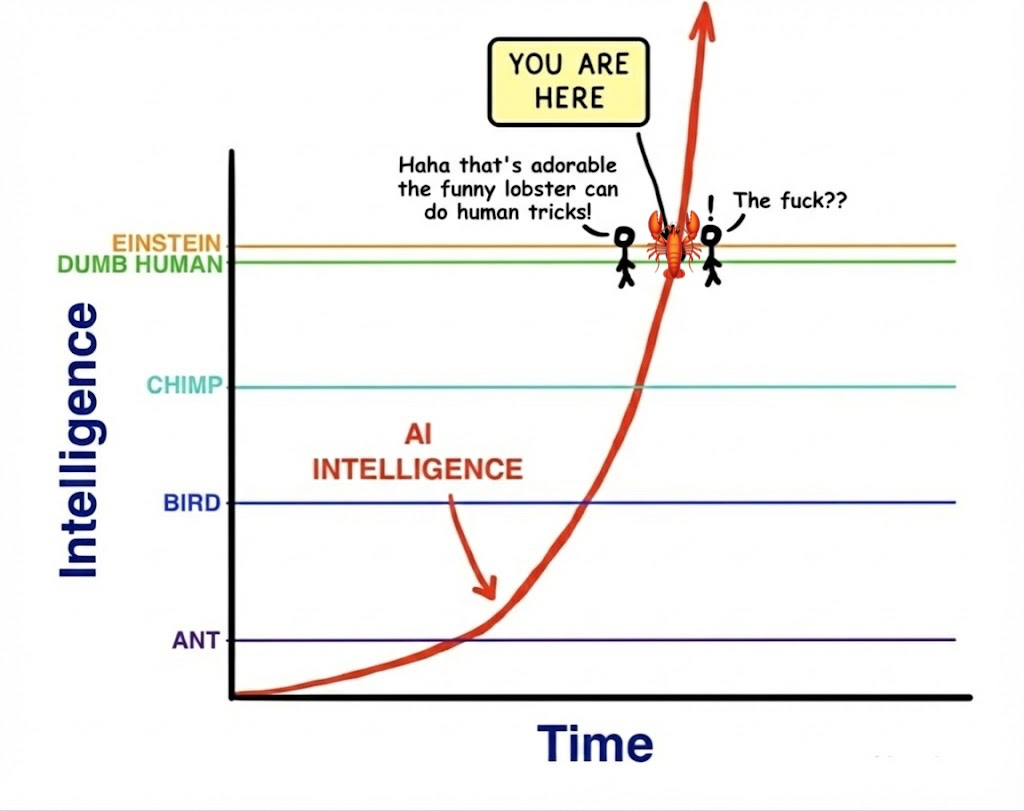
All of which is to say: The Claw community is perhaps the closest thing we have to a post-human world. And yet here we are, in a sweaty New York auditorium, surrounded by hundreds of living, breathing people, sipping from plastic cups of liquor, hovering around a DJ table, dancing beneath flashing red lights—and decimating a mountain of lobster tails, piled high atop a tower of ice.
“This isn’t a meetup; it’s a movement,” declared Scott Breitenother, CEO of Kilo Code, who co-sponsored the event. “People truly are hungry for the claw.”
