
UPDATE: On Friday morning in Beijing, Donald Trump told reporters that Xi Jinping said he is giving “very serious consideration” to the release of Pastor Ezra Jin. A Christian pastor and the leader of the Zion Church, Jin was arrested by Chinese police in October and his family hasn’t been able to speak with him since.
Frannie Block has been following the case ever since Jin’s arrest, and has obtained exclusive access to never-before-seen footage of Chinese police arresting Christians, audio recordings of police interrogations, and testimonies from those who have witnessed the raids firsthand.
Jin’s case has become a flashpoint for the Communist Party’s attempt to control the most intimate part of its countrymen’s minds: their relationship with God. Read Frannie’s story—and watch her video report—on the Chinese Communist Party’s war on Christianity.
—The Editors


The 20-foot-tall image of Mao Zedong looks down at the line of people snaking through the vast square in the heart of Beijing. On the busiest days, they stand four or five people wide, waiting hours for their chance to get inside the gold and white marbled hall that holds his embalmed corpse. Draped across his body, which sits in a clear crystal coffin, is a red flag imprinted with a hammer and sickle in the top corner.
More than 50 years after Mao’s failed economic and social policies thrust his country into poverty, famine, and chaos, any image, any reference to him, is still revered. Mao Zedong Thought (毛泽东思想 Mao Ze Dong Si Xiang), his version of communism, still forms the foundation of China’s constitution.
Neither famine, chaos, nor coup attempts could bring down Mao’s reign in China. What could possibly threaten the power and legacy of a man—and an ideology—elevated to such a god-like status?
The answer, according to the Communist Party, is God himself.

The Crackdown
Leaning up against the front door of Grace and Bill Drexel’s home in Washington, D.C., is a metal baseball bat.
“We’re on alert,” Bill told me. He opened the front door and pointed to his son’s plastic play kitchen in the front yard. It “has a camera looking out on the street,” he said.
Over the last six months, their computers have been hacked, and strange cars have lingered outside their home. Grace’s mom, Chunli “Anna” Liu, who lives in Wheaton, Illinois, says she one day found her tires mysteriously slashed while parked inside her garage.
They are convinced the Chinese government is responsible.
On October 10, 2025, police in China arrested three dozen Christian pastors and church members in a coordinated, countrywide operation. The officers came in the dead of the night, sometimes ripping young parents away from their kids, taking elderly men away in handcuffs, and temporarily cutting power from people’s homes, according to witnesses.
Grace’s father, Ezra Jin, 57, was one of those arrested. He is the lead pastor of Zion Church, one of the largest underground churches in China.
“The Chinese government tries to intimidate those who speak out,” Grace told me, “and they want to show that there is no safe place for you anywhere in the world, even if you think that you are in a country like America.”
Along with at least 17 other pastors, Jin is sitting in a prison in Southern China. The clergy face charges including the illegal dissemination of information online. Their real crimes were establishing underground churches, hosting worship sessions, and offering sermons outside of the Communist Party’s strict authority. In China, any deference to an authority higher than the party’s can make you an enemy of the state.
There are an estimated 160 million Christians across China, many of whom practice their faith in underground churches.
“It’s really just such a strong exhibition that the state cannot tolerate independent belief,” Bill said. “It can’t tolerate any sense of meaning, of spiritual authority, or moral authority outside of what the party wants.”
Ezra Jin’s story isn’t just about one man, or one family. It’s a story about the Chinese government’s latest crackdown on Christianity, and a chilling reminder of how far the regime will go to silence dissent.
I’ve obtained hours of interviews with Jin that the Drexels recorded in September 2025, a month before he was arrested. I’ve viewed never-before-seen footage of Chinese police arresting Christians. I’ve listened to audio of police interrogations, and read nearly a dozen testimonies of those who witnessed firsthand the arrests and raids on churches. More than half a dozen people who have been imprisoned or had family members imprisoned by the Chinese regime have shared their stories with me.
“A government moves from authoritarianism into totalitarianism when it wants to infiltrate and direct the most intimate parts of yourself, of your community, of your family,” Bill told me.
“What we’re seeing now,” he continued, “is a renewed desire from the state under Chairman Xi, basically, to engineer souls.”
Grace, who is eight months pregnant with her third child, hasn’t been able to speak with her dad since he’s been imprisoned, but what she’s heard from his lawyer is that he was in a cell by himself for a time, sleeping on a concrete bench with no blanket. He has been denied access to prescribed medicine he needs to control his diabetes. His cell has an open window, leaving him cold and vulnerable to the elements outside. When Grace’s grandmother came to the prison to bring Jin his Bible, the authorities refused to give it to him. Some of the lawyers defending the imprisoned pastors have had their law licenses suspended by the government.
The only message Grace has gotten from her father came from a letter he shared through his lawyer. “Don’t worry about me,” Jin wrote. “I believe that God is also testing us this time. . . .God will not abandon us.”
Finding God
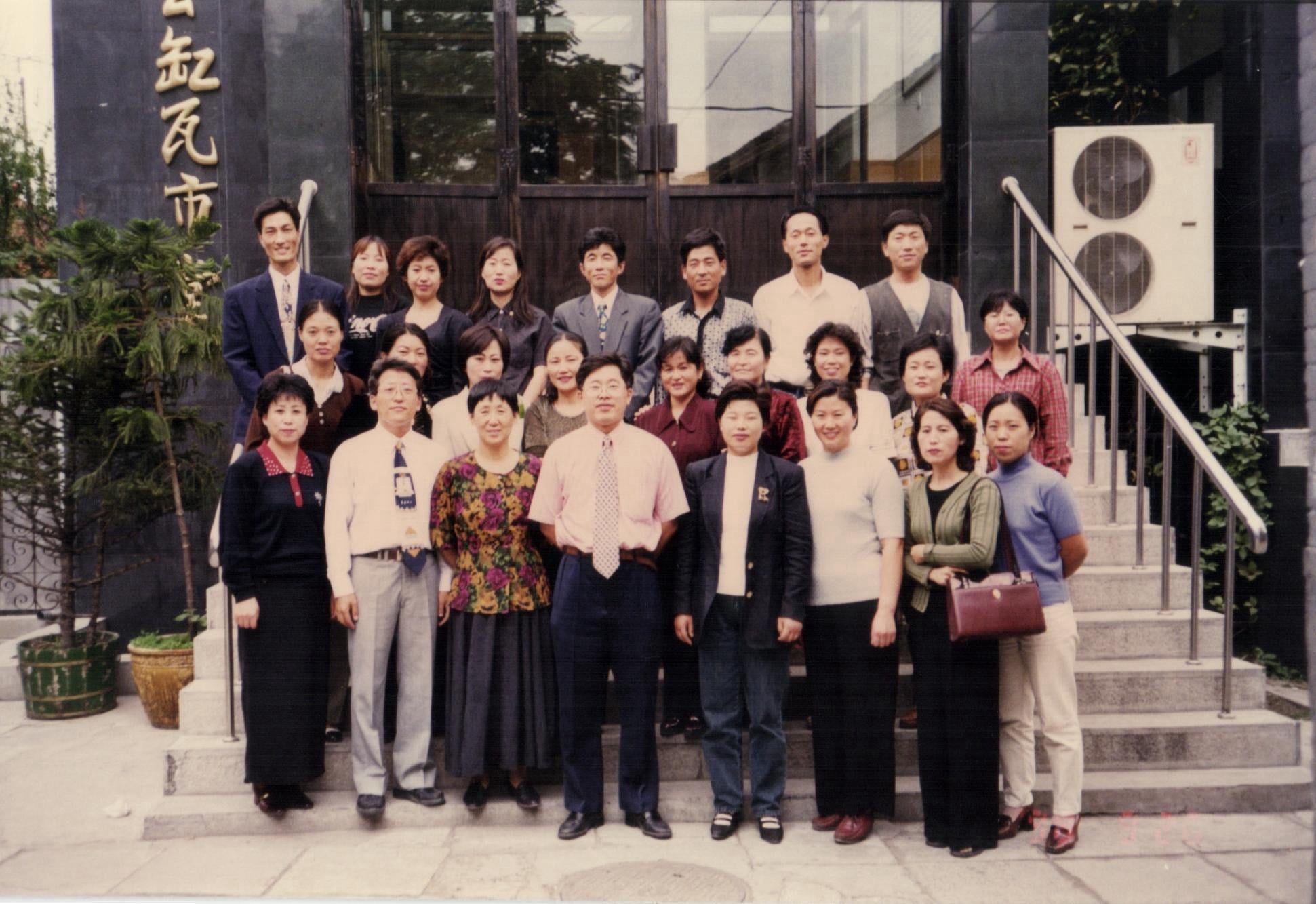
Jin’s family and friends were shocked when he told them he wanted to become a pastor in the 1990s.
He was born Jin Mingri, the youngest son of six children raised by poor farmers in a small village in Heilongjiang, the northernmost province in Eastern China. Two of his siblings didn’t survive into adulthood. He grew up in the shadow of the most tumultuous decade in modern China’s history, following the famine caused by Mao’s Great Leap Forward and the societal chaos that resulted from Mao’s next failed project, the Cultural Revolution.
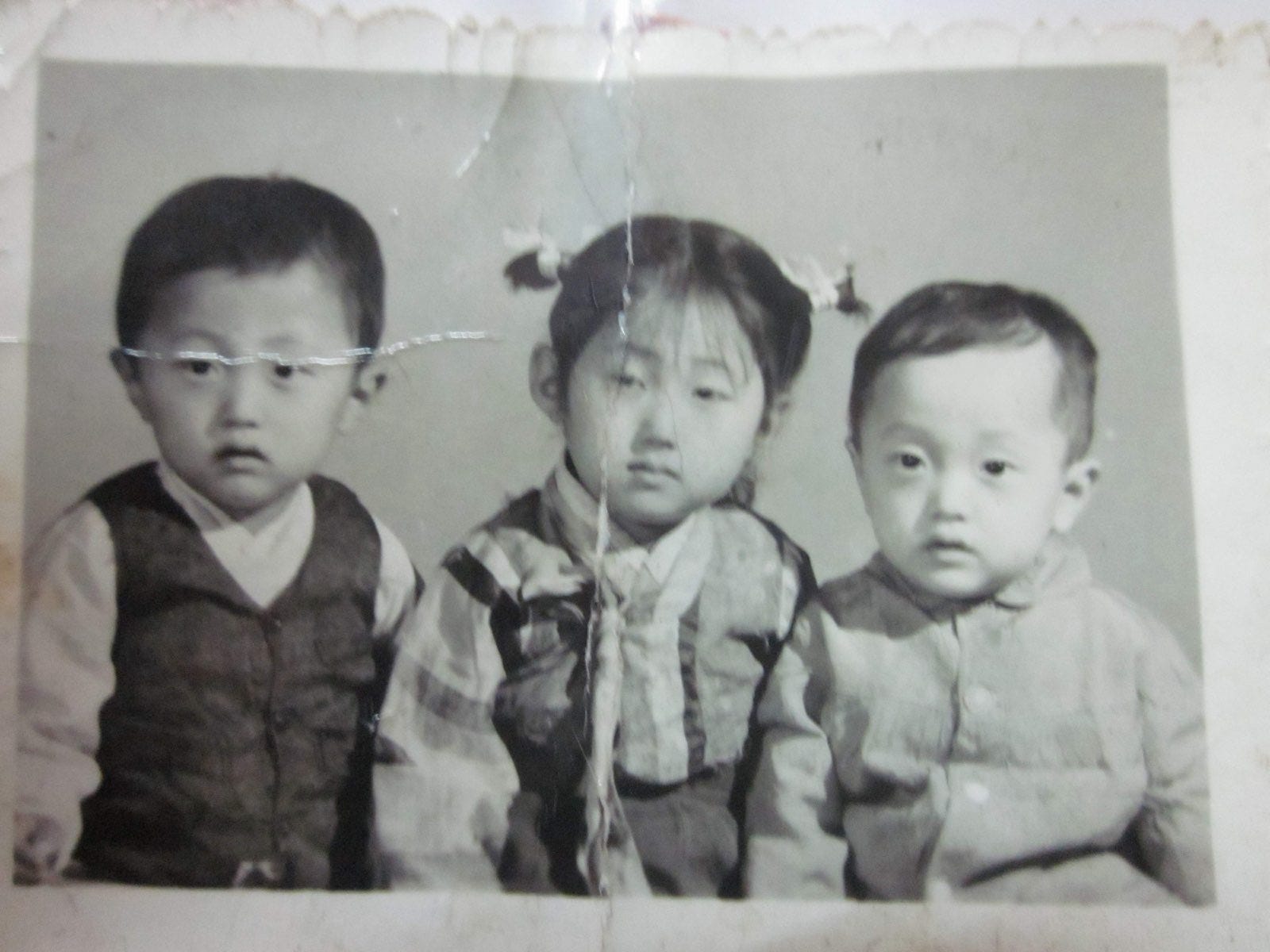
“Before we believed in God, we believed in country,” said Jin’s wife, Anna. “Our education told us that religion was an opiate, was not real. That God is something you made up in your mind.”
Jin’s family was Korean, ethnic minorities in China, but they supported the Communist Party. “In fact, when I was young, I think I had some active pursuit of communism,” Jin told his daughter and son-in-law in their recorded interviews. “But during college, I experienced a huge change of thought.”
In the spring of 1989, while Jin was a junior at Beijing University, the government sent tanks into Tiananmen Square, where nearly a million of Jin’s peers had gathered to protest the Communist Party’s authoritarian rule. International authorities estimate that up to 10,000 were killed.
Jin had joined a few of the protests early on, but he wasn’t there on the day of the massacre. Walking around campus in its wake, he said, he felt a profound sense of emptiness. To this day, he doesn’t know if some of his classmates were killed, fled, or were arrested by the government.
Around this time, he was invited to a funeral at a church frequented by Korean ethnic minorities. “I still looked down on Christians,” he admitted. But feeling obliged, he went.
“Inside that funeral, I heard a hymn,” Jin said. “The meaning of the hymn was that we are all homeless, that is, homeless wanderers. But God can still accept us. I became overwhelmed with emotion. I found myself a lost person, I had no God and no home to go back to. I was just like some trash in the universe.”
Thinking back to that moment, he sighed. “Ah, what a particularly poignant sadness. It was then that I really began to think that these Christians are different from me. They had God, a home they would go to after death, and confirmation that God loved them. I became envious.”
Jin continued going back to the church. Then one day, he knelt in the corner of the sanctuary after services and prayed: “God, I don’t know you very well,” he said, “but if you are really there and you love me, just save me.”
As soon as he spoke about God, he recounted, “My tears started falling uncontrollably. I weeped heavily. And I knew that God heard my prayers.”
The Outcasts
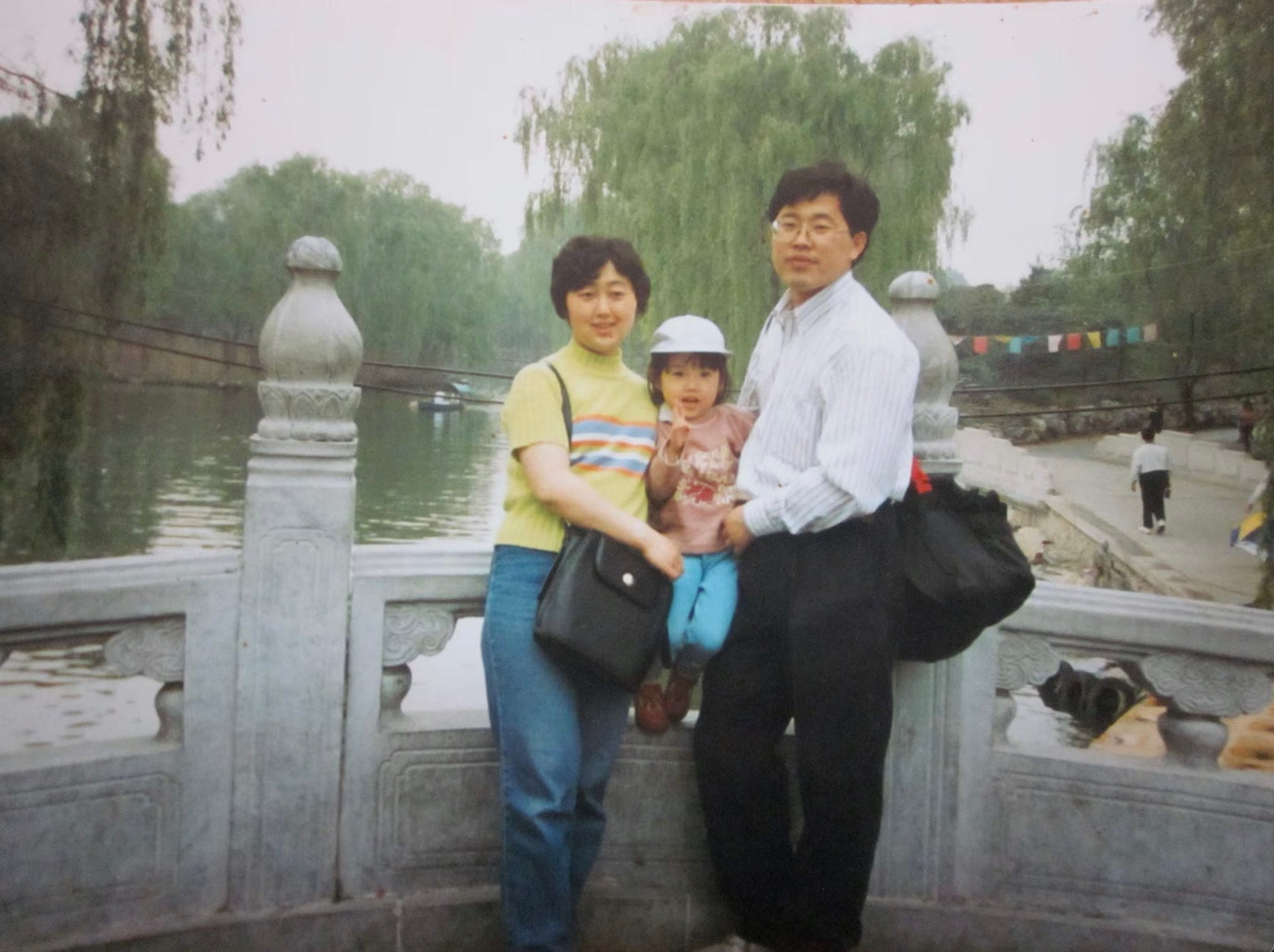
Anna was skeptical of Christianity, but began going to church with Jin after they started dating. She had witnessed the government lie about what happened at Tiananmen Square and the number of protesters killed. It made her wonder: What else could they be lying about?
In 1992, they got married, and Jin began studying at the state-approved Yanjing Theological Seminary in Beijing. After seminary, Jin was hired as a pastor at one of the state-sanctioned churches, known as the Three Self Patriotic Movement. Over the course of a decade, he became one of the church’s most prominent leaders.
Freedom of religion in China is technically a right granted by the Chinese constitution. But everything Jin did for the church—from choosing songs to giving sermons—had to be approved by party officials, none of whom were Christians. If too many people were interested in getting baptized, the church could find itself with a target on its back, Grace told me.
As a young child growing up in Beijing, Grace, 31, knew her parents were considered outcasts in Chinese society because of their faith. Grace wasn’t allowed to go to church with her parents, she said, thanks to a law that forbade proselytizing to minors.
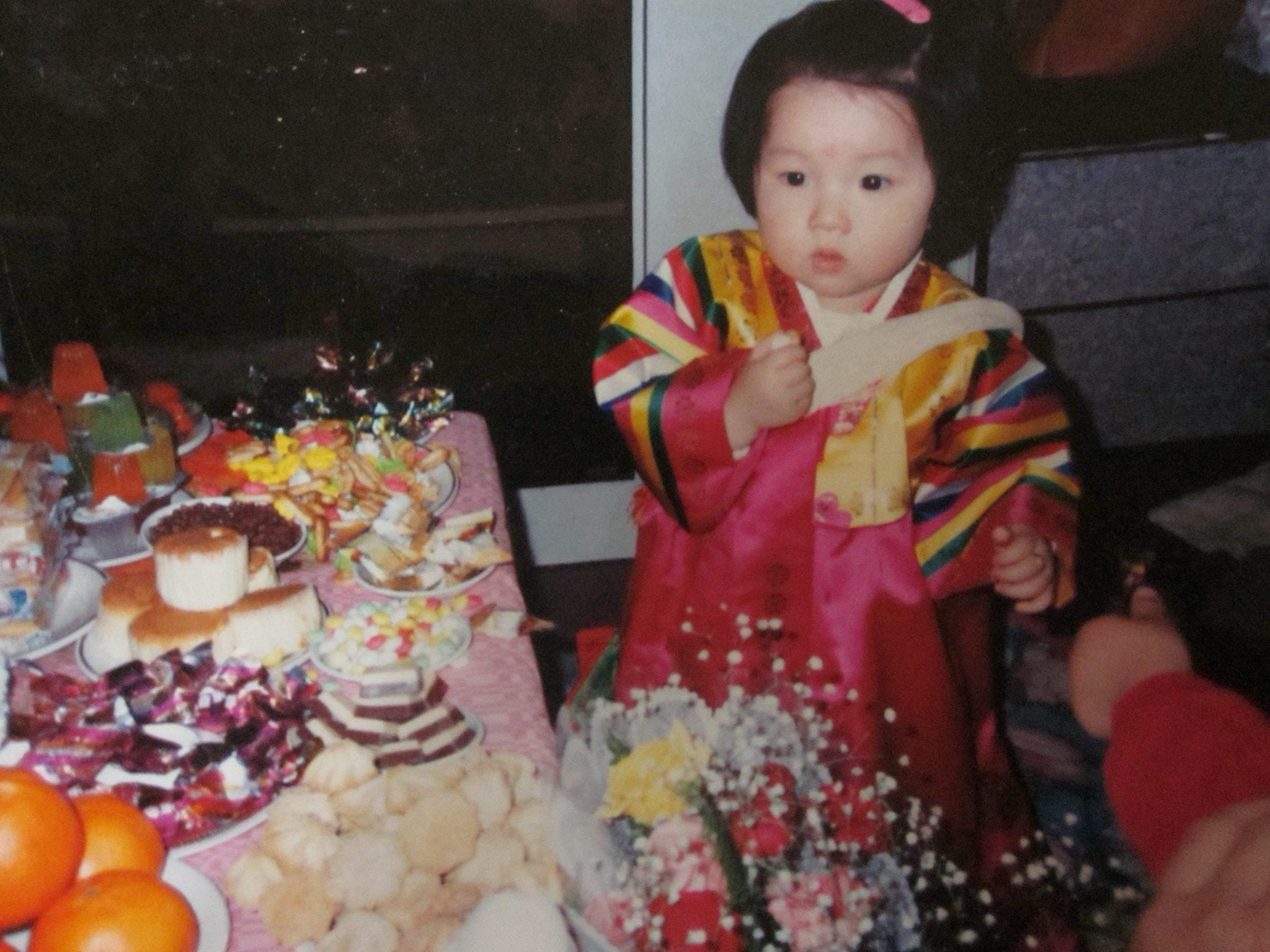
In 2001, as a first grader, she was the only one of her classmates not invited to join the Communist Youth League. Every morning, her classmates would line up in the gymnasium, their red scarves tied neatly around their necks, and salute the Chinese flag. Grace had to stand still, her neck bare and her arms by her side. A teacher told her that her faith was “incompatible” with the Chinese Communist Party. “If you just say you’re no longer a Christian,” Grace recalled her teacher telling her, “then you can join.”
In 2002, frustrated that the government’s controls had made it “impossible to preach the truth of the Gospel,” Jin moved his family to California, where he pursued a doctorate at Fuller Seminary in Pasadena. Grace called those years “among the happiest of my life.” Her parents had two more children, both boys, and Grace has fond memories of days at the beach, playing in the park, and going to church as a family.
In 2005, the Chinese government passed new regulations that further tightened the state’s control over religion. Chinese police rounded up Christians unaffiliated with the Three Self Patriotic Movement and placed their leaders in prison. Jin began hearing from his community back in China. “We need you back,” they told him, according to Grace. “We are not doing well. We need a shepherd.”
Jin “felt like he couldn’t just abandon his church,” Grace told me, but he knew he couldn’t return to a church controlled by the government, either.
By 2006, Jin and his family returned to China, and in March 2007, Jin started his own church. He called it Zion, a reference to God’s spiritual kingdom.
At first, Jin held small services in homes or basements or restaurants. Zion was part of a growing “house church” movement, operating outside the party’s control. Even so, Jin knew there was no point in trying to hide completely; he even walked into a government office in Beijing to share that he was the pastor of a new church.
Jin’s move back to China had come at a good time. Following the crackdowns of the early 2000s, the government eased its regulations, allowing house churches like Zion to flourish. By 2010, the membership in house churches—around 45 to 60 million—was double that of the Three Self Movement Churches.
“They were no longer hiding in people’s basements and singing softly,” Grace said. “They were renting out large business spaces and saying, ‘We are here.’ ” Two months after Jin moved back to China, Zion rented out a space in downtown Beijing. Within its first year, it had 300 congregants. Its services mimicked a typical U.S. megachurch, with rock music and stadium-style lighting.
But the government always loomed. “The government decides where the red line is,” said Grace. “It’s always shifting.”
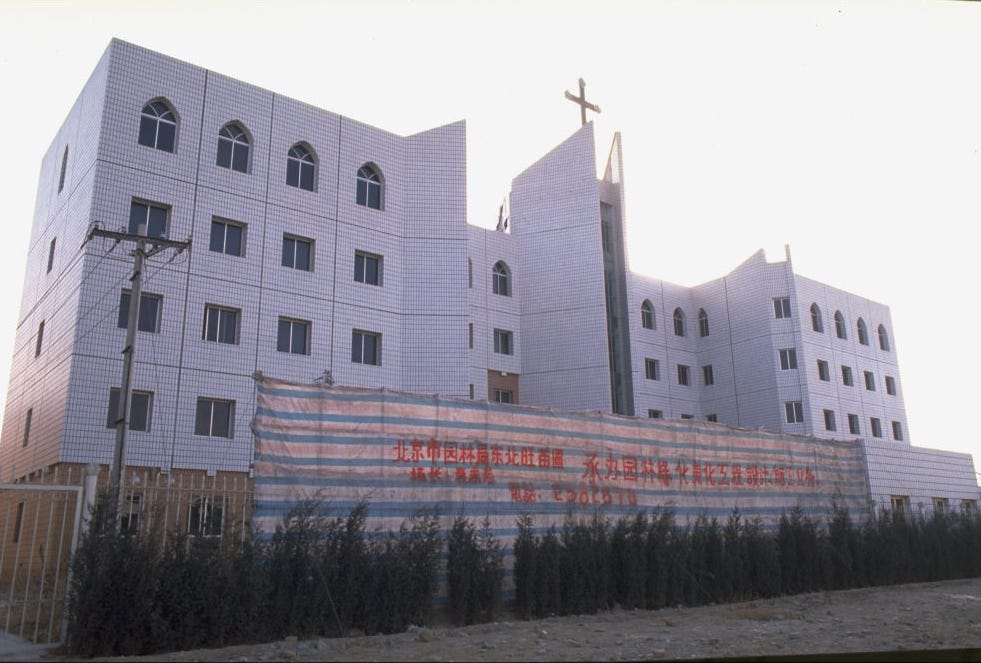
Then came 2018—a “watershed” moment for Christians in China, according to Pastor Sean Long, who now serves as Zion’s spokesperson. The government imposed another sweeping round of regulations that outlawed any unsanctioned religious activity. The Bible could no longer be sold on the internet, and churches were forced to display banners with Chinese Communist Party slogans, and perform the national anthem before singing traditional Christian hymns. Grace said police threatened to pull the Christian children out of their school and freeze families’ bank accounts if they continued to go to church.
One day in August, the police arrived at Long’s home. He pressed record on his phone before opening the door.
What kind of relationship does he have to the church? they asked Long, according to the recording of the interaction reviewed by The Free Press. Why hadn’t he joined the Three Self Patriotic Movement churches? His denomination was in violation of the state’s new religious regulations, the police said. Long responded calmly: “No state agency, individual, or power can interfere with citizens’ freedom of belief. This is number one. I think this regulation is clearly suspected of violating the constitution and trampling on freedom of belief.”
In China, any deference to an authority higher than the party’s can make you an enemy of the state.
The police left without taking Long away, but others weren’t as lucky. Wang Yi, the pastor of the Early Rain Covenant Church in Chengdu and an outspoken critic of the government’s repression of Christians, was arrested and charged with inciting subversion of state power. He remains in prison to this day.
A month after the police interrogated Long, they showed up at Zion Church in Beijing and demanded that Jin place facial-recognition cameras inside the church’s nave. “It is quite creepy,” Long told me, “just like George Orwell’s novel, 1984 said, the Big Brother is watching you everywhere.” Jin refused to comply. The government shut the church down.
At the height of this new wave of repression, Bill Drexel, then 25, arrived in Beijing from the U.S. Officially, he was there to study Chinese concepts of privacy at the prestigious Tsinghua University. In reality, he wanted to investigate China’s state surveillance of religious minorities, including its crackdown on home churches.
Bill met with a group of Zion Church members, who by then were worshipping in small gatherings across the city. Sitting a few rows behind him was Grace.
Grace noticed him immediately. ”He stood out,” she said with a laugh, pointing to her husband’s reddish-brown hair and fair skin. The two got to talking after church, and eventually, Bill worked up the courage to invite her out to lunch.
But being together seemed impossible. Jin’s family was deemed a national security threat and banned from leaving the country. Bill left China a few months after they met. Smitten, he tried to concoct a plan to help Grace escape, so they could be together, even plotting to smuggle her onto a Libyan cargo ship, a plan he now admits was crazy.
But then, in January 2020, just before the pandemic hit China, border patrol agents allowed Grace to board a plane bound for South Korea. She still doesn’t know why the Chinese government let her go, but Grace had escaped the party’s grasp.
Her dad never did.
Taken Out for Tea
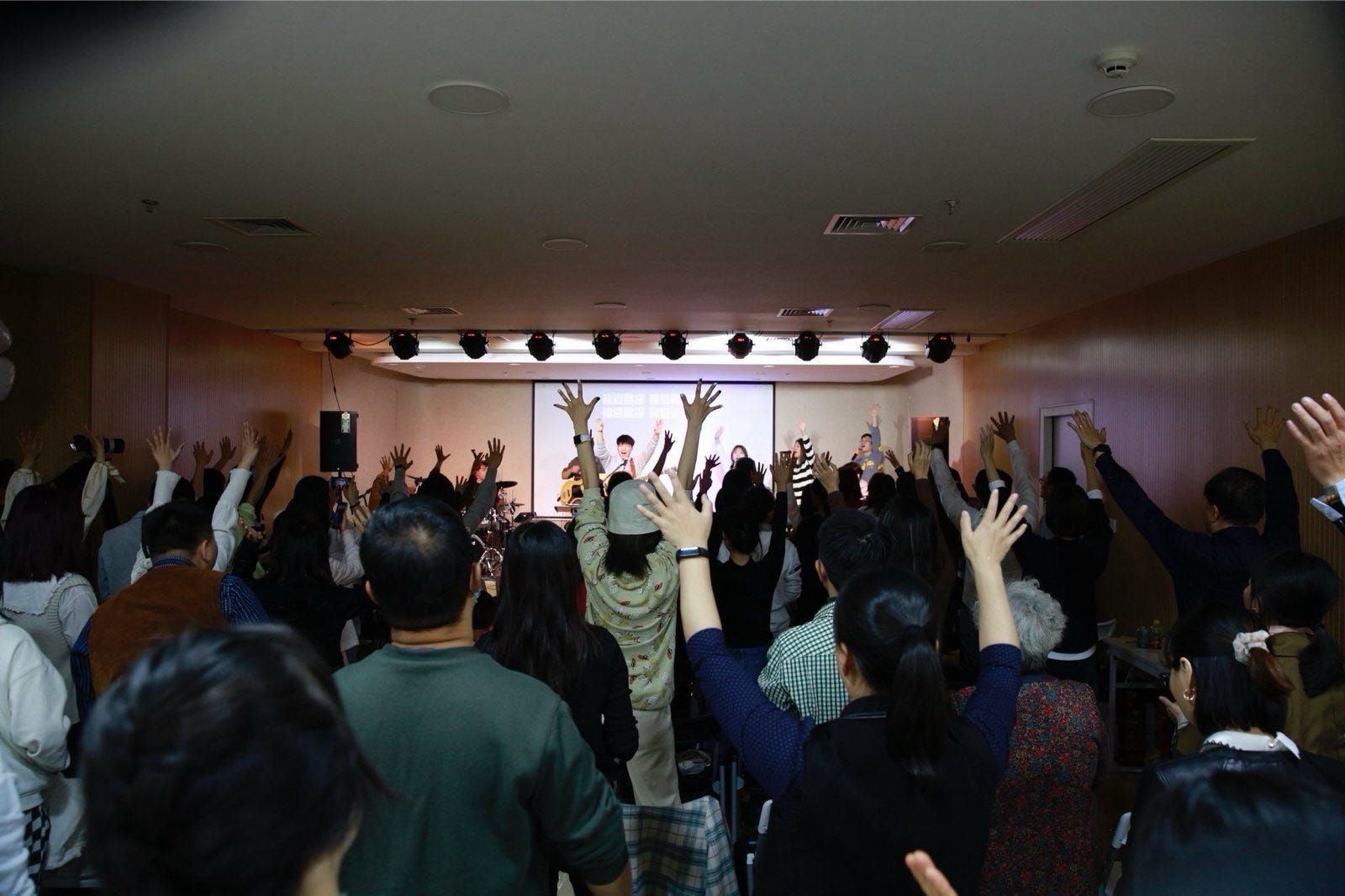
There are an estimated 160 million Christians across China, many of whom practice their faith in underground churches. But their safety is always in question.
Bob Fu started a nonprofit called China Aid to help Christians facing persecution. Since its founding in 2002, Fu, who now lives in Texas, claims the organization has helped smuggle over 600 Christians out of China. He’s known as “the pastor of China’s Underground Railroad.”
Fu himself spent two months in a Beijing prison in 1996 for running an illegal house church. He told me that the persecution of Christians in China now “has reached the worst level since the Cultural Revolution.”
Grace understood full well that the state might go after her father again.
She had watched the state suppress dissidents for decades—dissidents like Liu Xiaobo, the human rights activist who was awarded a Nobel Peace Prize in 2010, and later died in Chinese custody. Or Gao Zhisheng, the Christian lawyer who defended Uighurs and Falun Gong practitioners, and was later imprisoned by the Chinese regime. Or Wang Yi, the Christian pastor in Chengdu who is serving a nine-year sentence for “inciting to subvert state power.”
Unlike those well-known critics, Jin was intentionally apolitical. “He never let the politics get in the way of bringing people into contact with God,“ Bill said. The church “was pragmatic in that way. And it never tried to pick fights with the government.” In a letter written from prison last November, Jin stressed this point: “We do not oppose dialogue with the government, nor do we confront it, but rather emphasize obedience to those in authority.”
After the government shut down Zion in Beijing, Jin got creative. He moved his sermons online. His followers could pop in their headphones anywhere in the country and go on a walk and listen to him and other ministers preach.
“The Chinese government tries to intimidate those who speak out, and they want to show that there is no safe place for you anywhere in the world.” —Grace Jin Drexel
During the pandemic, Grace said Jin’s virtual sermons began to fill the void for hundreds of thousands of Christians across the country trying to survive the harsh lockdowns. The church flourished—reaching a membership of more than 10,000 people.
“The house church movement in China was revived again and again through persecution and suffering,” Long said.
But the government continued to make its presence known to Jin and others in the church. In 2021, Grace told me, Chinese authorities showed up to her dad’s house to “take him out for tea.” After Jin failed to show up for a meeting with some congregants, they found him sitting with plainclothes officers at a restaurant. It appeared Jin had been drugged. A video taken by a church member, Li Xiaoming, shows Jin slurring his words and unable to sit up straight in his chair. On the table, Li later recounted in a written testimony, was what appeared to be grape juice. The video, which I viewed, then shows a uniformed officer approaching Li and batting the phone out of his hand.
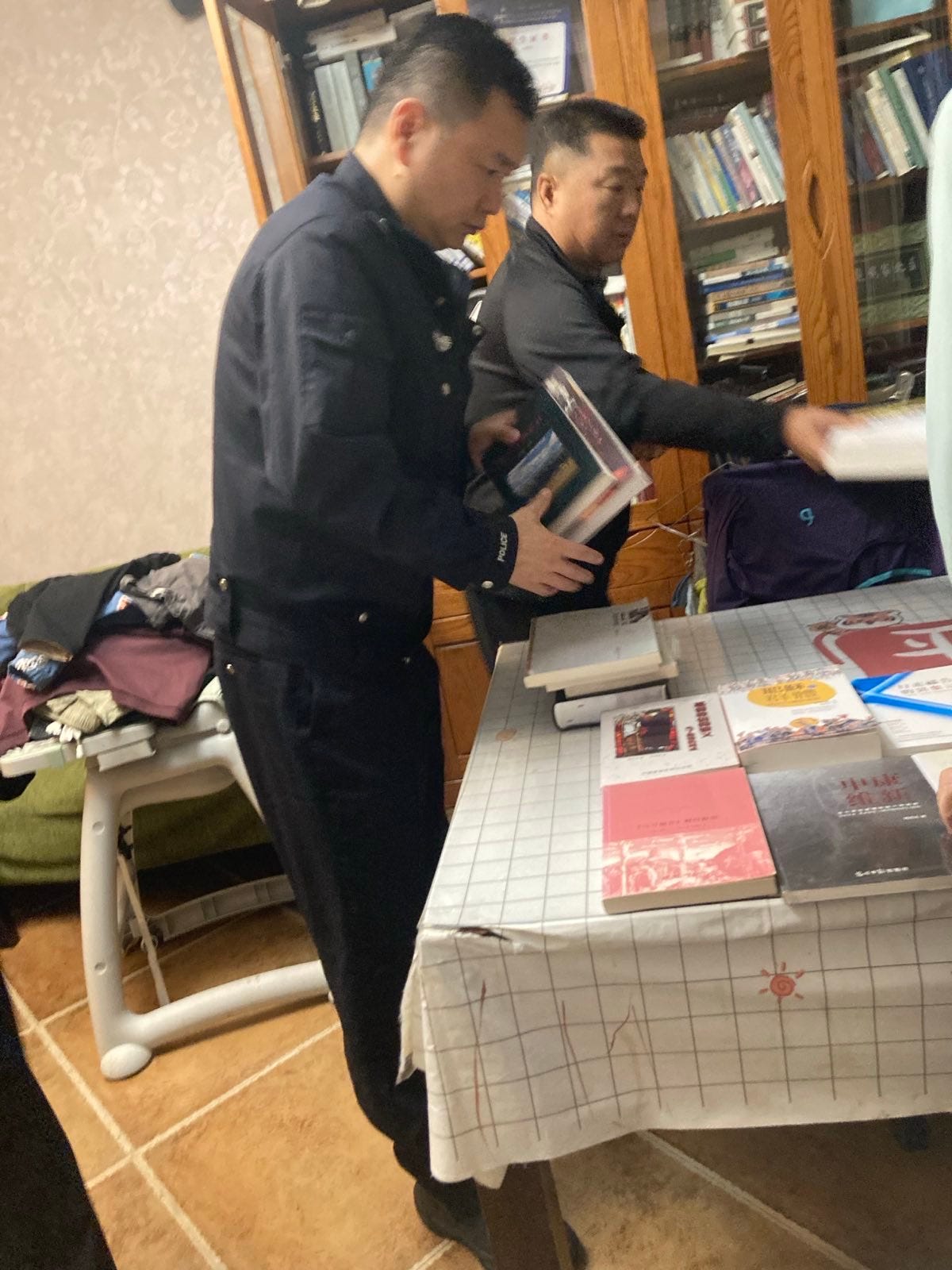
In September 2025, the government passed a law making it illegal to disseminate religious teachings online outside of government-approved websites. That’s when Bill and Grace, fearing that the government might imprison him for good, began recording Jin’s conversations. Sure enough, on October 10, 2025, Grace woke up to a text from her dad asking for prayers for one of Zion’s pastors who had been detained that day by police. By the evening, her dad stopped responding to texts. That’s when Grace knew he was likely taken away, too.
I read through nearly a dozen written testimonies of those who witnessed the arrests. They described swarms of officers forcibly entering and searching peoples’ homes, conducting strip searches of bystanders, and arresting people without any explanation. In one case, police broke down the door of Pastor Wang Cong’s home in Beijing and arrested her in front of her 3½-year-old daughter.
Anna Liu, Jin’s wife, joined a Zoom call the next day with other church members to share information and pray for the detained pastors. While on the call, Anna said, one of the congregants heard a knock. The person left the meeting to answer the door. “That individual also disappeared,” Anna told me, shaking her head.
Li Yan, Anna’s mother, lived with Jin at the time of his arrest. In her witness testimony, she wrote that approximately 20 to 30 officers rushed into their home that evening. None of them were in uniform, and they did not identify themselves as police. They handcuffed Jin and another pastor while Yan was forced to sit on the apartment’s sofa while being guarded by police.
Within a few days, Chinese police delivered a notice to Yan telling her that Jin had been charged with illegally disseminating information online, in violation of the new legislation.
“You feel extremely helpless and angry and sad and, like, powerless,” Grace said. “You want to help them, but you don’t know how.”
Bob Fu told me that when he was imprisoned for running a house church more than two decades ago, his cellmates would come to him seeking spiritual guidance, despite not being Christian. Fu said he believes Xi Jinping will “fail miserably” if he tries to force people to abandon their relationships with God.
“He can bind them, their hands and into their prison cell, but he cannot bind their prayers directly to God,” Fu said. “Whenever he imprisoned more Christians, Xi Jinping became God’s servant in the opposite way. He will revive God’s church in China.”
Totalitarian Justice
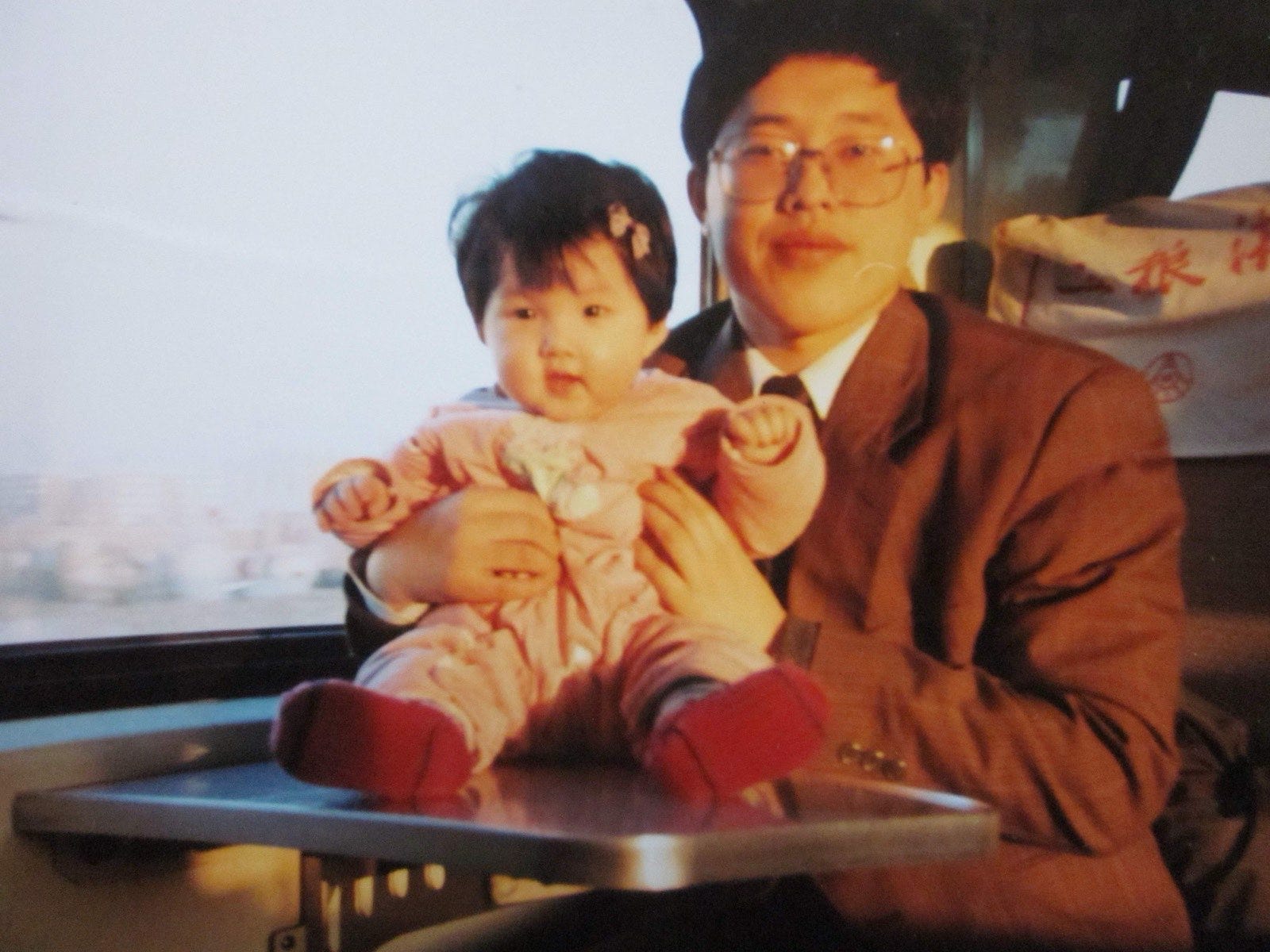
Since her father’s arrest, Grace has become his voice.
“I didn’t want this for my life,” she said.
Fighting for Jin’s freedom has consumed Bill and Grace. Bill’s advocacy has become almost a second job on top of his work at the Hudson Institute, where he focuses on China and India policy. Grace left her role as a Senate aide researching Chinese human rights abuses. She now is the director of advocacy for the Luke Alliance, which works on behalf of Christians all over the world.
She has testified before Congress twice, penned op-eds in The Wall Street Journal and The Free Press, and traveled the world—Geneva, London, Rome, Berlin, and Brussels—to advocate for her father’s freedom. At one point during the International Religious Freedom Summit in Washington, D.C., Grace and I got lost searching for the UN Special Rapporteur on Freedom of Religion or Belief, who Grace hoped would offer assistance.
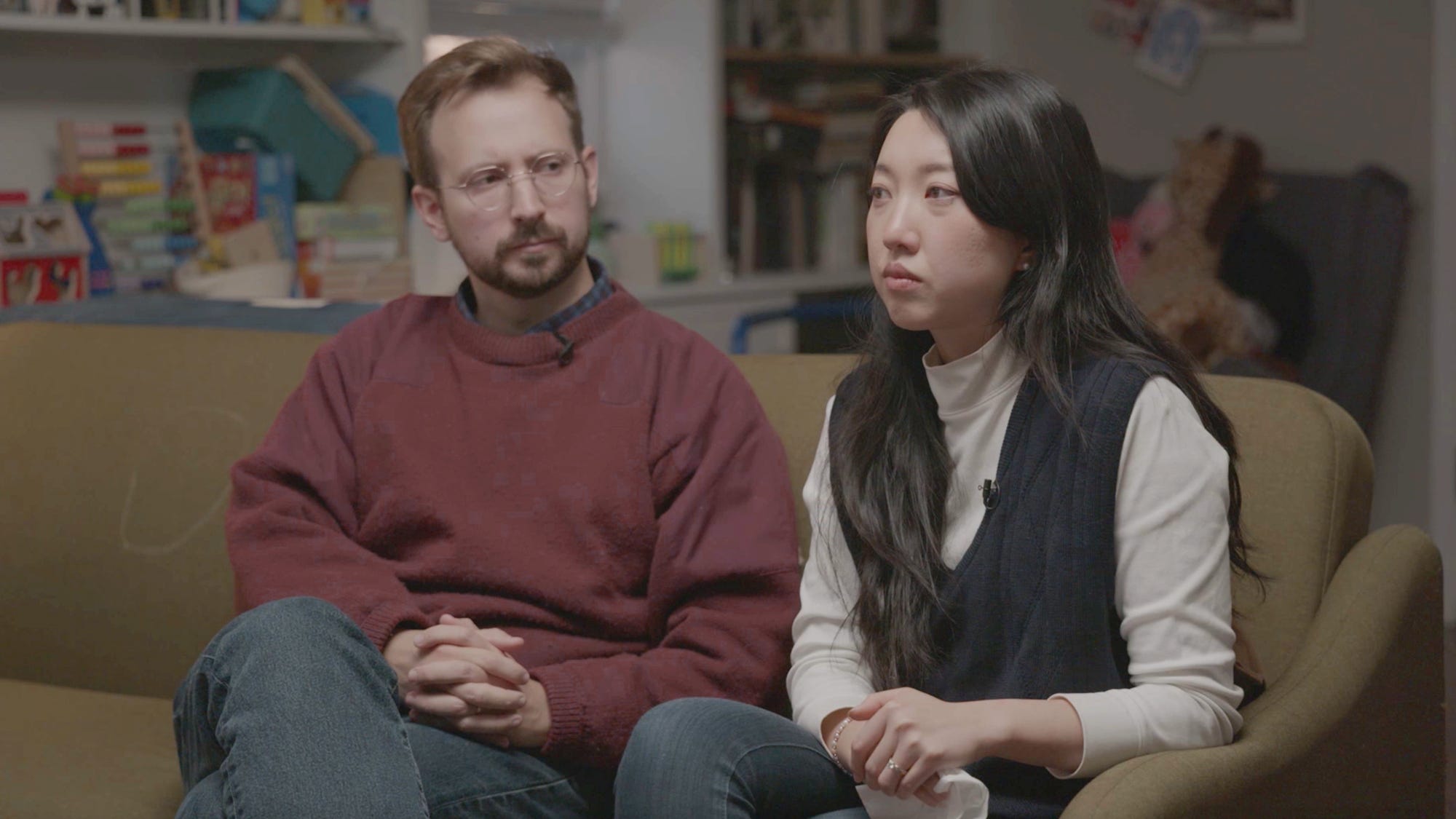
“I’m just not good at this,” she sighed. “I always feel like I’m not doing enough . . . that any opportunity I miss could be the thing that gets my dad out of prison.” Last month, she was invited to the White House to speak directly with President Donald Trump, but after going through security and waiting for hours, the president’s schedule changed and Grace left, heartbroken.
“There’s never been this much attention on any persecuted church in China before,” she said. “And I understand that there’s such opportunity and privilege and honor to talk about their story.”
The outlook for Grace’s dad looks bleak. China’s court system doesn’t operate like America’s. “They’re not going to get a fair trial,” said Gao Pu, whose parents, Gao Quanfu and Pang Yu, were arrested for running a church in May 2025, told me. “Behind closed doors, everything is coordinated.” Chinese courts have a 99 percent conviction rate for criminal trials. The courts are among the state’s “toolkit,” according to Bill. “Everything is in control of the government and the party.”
Indeed, few people understand what Grace is going through better than Gao Pu. Pu said he hasn’t been able to speak directly with his parents since their arrest a year ago. Through their lawyers, he said he’s learned that his mom, who isn’t even a pastor, hasn’t been able to receive her medication inside prison and that both of his parents have been subject to forced labor and Chinese propaganda sessions.
Liu Pengyu, a spokesperson for the Chinese Embassy, emailed me, stating that “The Chinese government protects, in accordance with the law, the freedom of religious belief and related rights of its citizens. At the same time, we strictly prohibit anyone from engaging in illegal or criminal activities under the guise of religion, and firmly oppose any country or force interfering in China’s internal affairs under the pretext of religious freedom.
We urge the relevant media outlets to respect the facts, cast aside prejudice, and cease attacking and smearing China’s religious policies and the state of religious freedom.”
To the extent there’s good news, it is that the Trump administration seems to be taking up Jin’s case. Two days after Jin was taken into custody, Secretary of State Marco Rubio issued a statement condemning his arrest and demanding his freedom. The U.S. Deputy Secretary of State for Management and Resources, Michael Rigas, told me that the State Department is “continuing to work behind the scenes to secure his release.” In March, Texas Senator Ted Cruz pushed a resolution through the Senate “demanding that China release pastor Ezra Jin and other leaders of Zion Church.” It passed unanimously.
“These pastors who lead home churches, they know they’re risking persecution,” Cruz told me. “They know that the government threatens them with arrest, threatens them with horrible treatment, and nonetheless, they have the courage of their faith.”
This week, after weeks of delays, Trump is scheduled to meet Xi Jinping in China. Grace is determined to get her dad’s case on the agenda—and she might have succeeded. Last week, Trump said for the first time he plans to “bring it up” directly to Xi.
“We are fully aware that the likelihood of getting Grace’s dad out, or any of those with him, is extremely low,” said Bill. “It would be a miracle. We believe in a God of miracles. So we are hoping for that actively, and we are pushing the U.S. government and any government we can to help make that happen.”
Teary-eyed, Grace nodded in agreement. “We’re asking for a miracle.”
In a letter her father wrote from his prison cell six months ago, he said, “God works all things together for good to those who love him. In such trials, our faith is refined, becoming pure as gold; our hope grows brighter, shining like the morning star.”


Why hasn’t the Pope spoken up for any of these Christian communities? Why hasn’t the Pope forcefully spoken out about the massacre of Christians in Africa? And finally, why has the Pope spoken up for the Muslim population?🤔
Thank you for this expose. Communism is godless and demonic, forcing the worship of the false idol of equity. The CCP is a criminal organization. Praying for Pastor Jin and that America will prevail just like we did over the Soviet Union. Never forget all of the CCP's many crimes against humanity from the Great Leap Forward to the Cultural Revolution to Tiananmen Square: https://yuribezmenov.substack.com/p/tiananmen-square-massacre-1989-2025