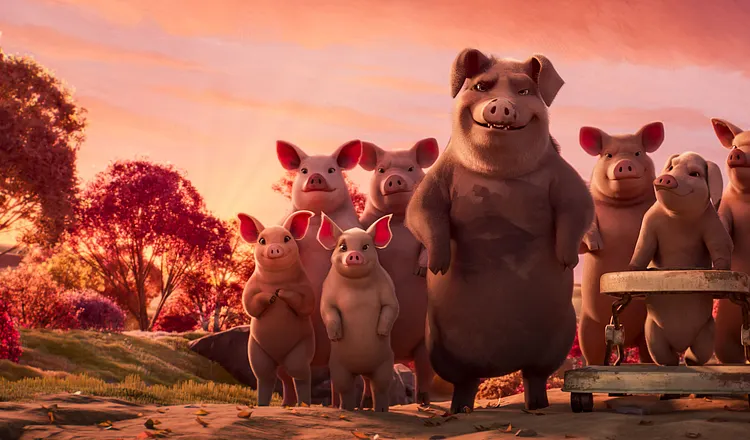
George Orwell’s timeless classic Animal Farm, a “fairy story” aimed at young readers, has sold some 11 million copies worldwide since it was first published in 1945. Its allegorical subject, Soviet communism, is not subtle. After all, the book begins with a speech by a pig who stands in for Karl Marx and, after an egalitarian revolution by animals that take over the farm, features a power struggle between a Trotskyist pig and a Stalinist pig and ends with the pigs installed as dictators indistinguishable from the human overlords their revolution originally sought to do away with. According to Orwell's preface, not published until 1972, one of the four publishers who originally rejected the book explained to Orwell that the issue was that Animal Farm took as its subject the evils of a country that was then an ally of both Britain and the U.S. “If the fable were addressed generally to dictators and dictatorships at large then publication would be all right,” the publisher wrote. “But the fable does follow, as I see now, so completely the progress of the Russian Soviets and their two dictators, that it can apply only to Russia, to the exclusion of the other dictatorships.”
This unnamed publisher may have been a patsy and a discredit to literary freedom, but at least he knew how to read at an eighth-grade level. Sadly, this is more than can be said for the makers of a new version of Animal Farm, directed by Andy Serkis, the actor and motion capture specialist famous for playing Gollum in The Lord of the Rings and Caesar in the Planet of the Apes franchise.
The new film, voiced by a cast of A-list actors including Glenn Close, Seth Rogen, Steve Buscemi, and Woody Harrelson, earned bad press when its trailer was released late last year, but the reality is somehow even worse than it seemed back then. The film feels, to put it plainly, like a bad joke about Orwell that a right-wing X account would dream up to get mad at. Hey guys, what if those crazy, woke socialists in Hollyweird actually went back and rewrote “Animal Farm” to be about the exact opposite of what the author intended? In the film, the message is no longer about how the revolutionary dreams of doing away with capitalist hierarchy are inevitably dashed by the avaricious realities of human nature. The problem, as portrayed by Serkis, is instead corporate greed under capitalism.