



It’s widely understood now that dating apps have destroyed romance, and Gen Z is struggling to couple up. We’ve published a few stories about how this happened—but here at The Free Press we’re also frustrated by the pessimism we see, everywhere, when it comes to the pursuit of love. The New York Times declares “Gen Z Can’t Afford a First Date” (ever heard of a walk in the park!?) and “Gen Z-ers Are Ditching Sex. They Might Be Onto Something” (on what? Libido-crushing medication!?). The Cut writes that “heterosexual women have reached a breaking point.” Celibacy is glamorized. Our fear is that, if you say the search for love isn’t worth it, young people come to believe it.
And they give up on one of the greatest joys life has to offer.
Plenty of our columnists have injected some romantic optimism into our pages. Kat Rosenfield wrote, “Stop Saying Dating Is Terrible.” Larissa Phillips declared: Bring back matchmaking! Arthur Brooks explained how to make dating apps work for you. And for today’s feature, Kara Kennedy—who, lest we forget, married a man she’d known a few months—interviewed half a dozen post-app dating pioneers, young people who decided that just because Tinder is terrible, they didn’t need to give up on dating completely. Instead, they got creative, inventing new ways to track down The One . . .
While reporting, she spoke to Jake Kozloski—founder of Keeper, an AI matchmaker—who gave her a scoop we think is representative of the dating crisis. He told her that Hinge had been interested in acquiring his company, but took issue with their mission—which is, controversially, “to give everyone on Earth the opportunity to marry the right person.”
During negotiations, Kozloski said, “I ended up getting a stern call from someone on their team saying that they read our blogs and did not like that they were pro-marriage, as they felt that was a value judgment they weren’t comfortable making.”
It’s almost as if the aim of the apps was never to get people coupled up for life—but rather, to keep us swiping. Read on to meet the young people with other ideas.

In April of this year, 22-year-old Erin St. Gull printed out a hundred copies of a one-page document and hung them up around Toronto. She calls it a “dating doc,” and in it, she lays out what she needs: marriage; kids; someone, male or female, who is in their late 20s or early 30s and who, preferably, can make her feel excited about life. She also includes what she can offer potential suitors: fertility and youth. She writes that she is extremely smart—and that she can “say this with little pretension as it is the one most provable trait I can claim to have”—as well as “philosophically inclined [and] ruthlessly committed to reason.”
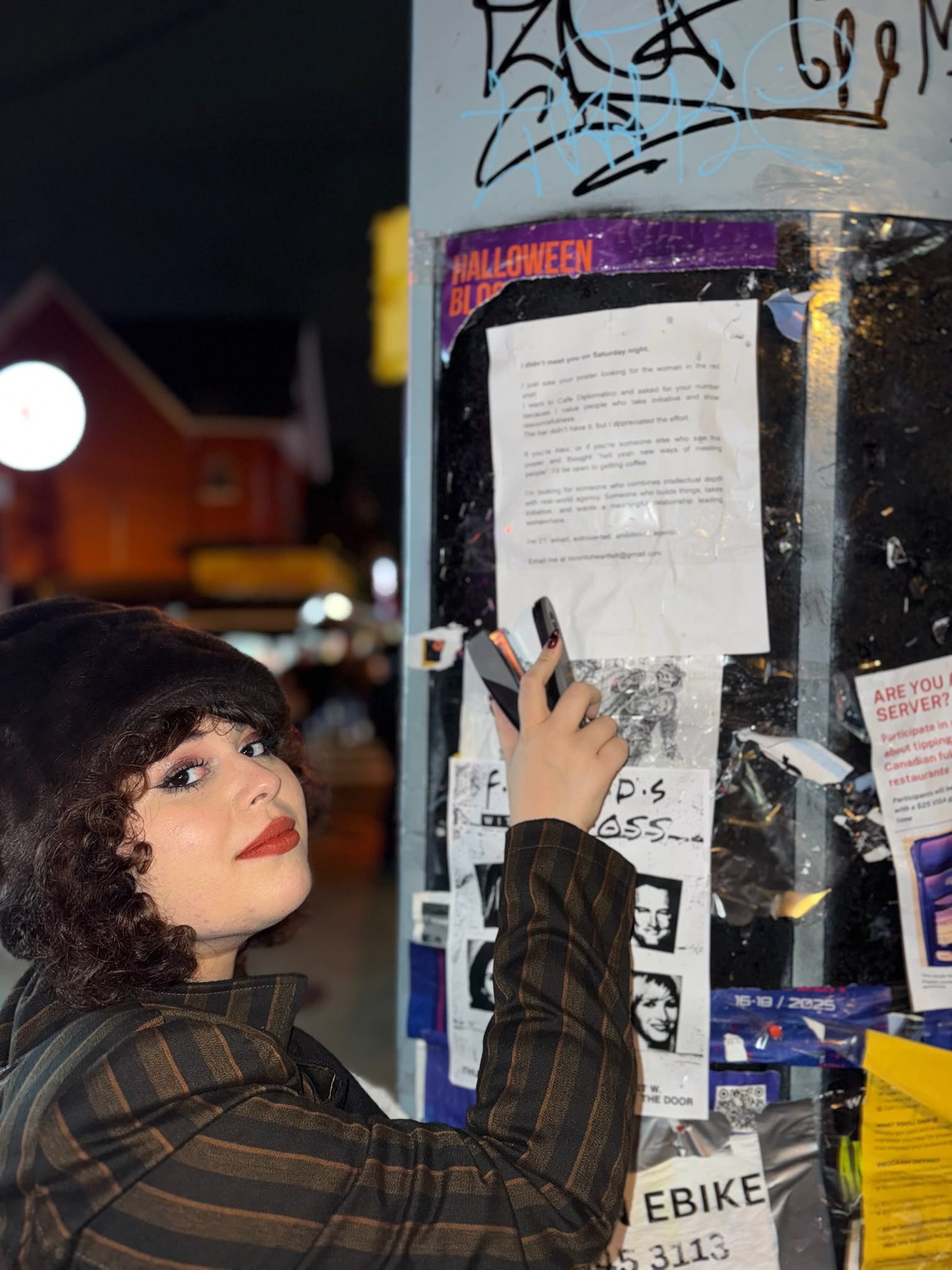
She is also, as you can probably tell, incredibly self-starterish. St. Gull recognizes, like most of her generation, that the modern dating landscape is broken. But instead of waiting around for someone vaguely acceptable to swipe right, she is willing to put herself out there and scour continents to find the one.
She left Toronto shortly after covering the city with posters, returning to her native France, but on the way she embarked on a 13-city tour of Europe, “a big part” of which was “trying to find the person.” She went to an effective altruism conference, conscious that there would be, she told me, “a high concentration of eligible bachelors and bachelorettes in this circle . . . so I knew to scan the room.”
For St. Gull, dating apps are just “one channel,” and one that often doesn’t lead to much.

“At some point,” she said, “my relationship with dating apps shifted from ‘I’m trying to find someone on here,’ to, ‘I am using this purely for entertainment, and on the off chance that someone comes along and is actually interesting, I’m going to talk to them.’ ”
