

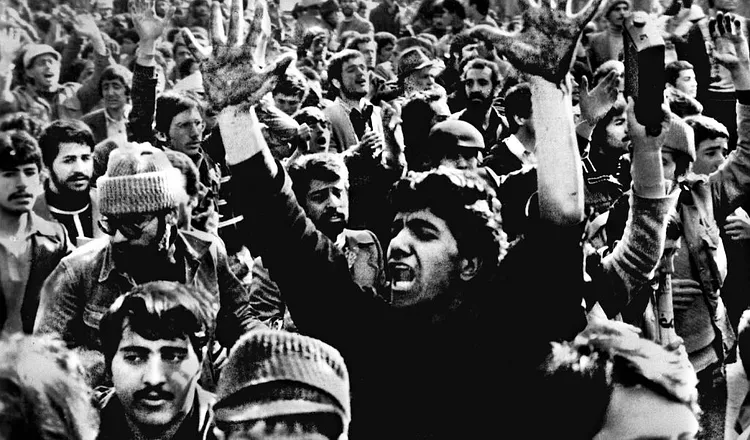
Today seems like the day for a few thoughts on revolutions. There is always a moment in the course of every revolution when the mysterious and invisible, but visceral, alchemy of power starts to change as the arsenal of terror that has long been the monopoly of the tyranny suddenly starts to leak away—first slowly, and then quickly. The myrmidons of the despot—who previously stood their ground, shot into the crowds, and tortured their prisoners—begin to lose confidence, hesitate, and then run.
Has that moment come in Iran? It is not clear yet. Access to the internet is blocked, and the phones are cut. But the images that have emerged suggest that momentous change is closer than ever. This vertiginous revolutionary moment also carries great danger. More than 200 protesters may have been killed since December 28, and more deaths are feared, as the dictatorship has not yet deployed the full force of its repressive organs as it did in earlier protests.
Ayatollah Ali Khamenei, the supreme leader of Iran who occupies a role akin to a sacred monarch, issued a grave warning to the public on Friday. “Everyone knows the Islamic Republic came to power with the blood of hundreds of thousands of honorable people,” he said. “It will not back down in the face of saboteurs.”
