
The Free Press
NewslettersSign InSubscribe
The Wrong Lessons from Iran’s Past
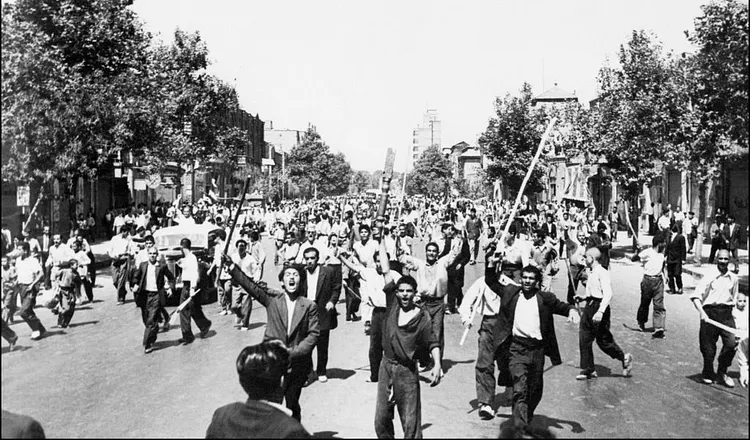
Massive protests broke out across Iran after Prime Minister Mohammad Mossadegh was overthrown in a U.S.-supported coup in 1953. (Intercontinentale/AFP via Getty Images)
Critics of U.S. action to support Iranian protesters have their history wrong, argues Eli Lake.
By Eli Lake
01.14.26 — History
--:--
--:--
Upgrade to Listen
5 mins
Produced by ElevenLabs using AI narration
7
11

The history of modern Iran is a story of revolution and regret, of a people torn between the ideals of constitutional democracy and a centuries-old tradition of Persian kings. The latest chapter of that story is playing out on the streets of Iran right now. If you want to understand the backstory behind the Iranian protests, listen to Eli Lake’s two-part Breaking History epic on the birth of modern Iran. Catch it wherever you get your podcasts, or hit play below to listen to Part One:

0:00
-1:07:24
Audio playback is not supported on your browser. Please upgrade.

In our pages today, Eli dives into one chapter of that history, and how it is being used—and abused—in debates about how the West should respond to the ayatollah’s ruthless crackdown on protests in Iran.

President Donald Trump is deciding how far the U.S. will go to intervene on behalf of Iran’s people as its revolution heats up, but American noninterventionists on both the left and right are horrified by the idea of any U.S. involvement. The critics are haunted by memories of the 20th century—specifically by a widely misunderstood power struggle that pitted Iran’s nationalist leader against a young, inexperienced monarch more than 70 years ago.

Ends today: We’re celebrating a new year and new additions to our newsroom. Enjoy 20 percent off a subscription to The Free Press.

Get 20% off

The episode is the 1953 fall of Mohammad Mossadegh, the prime minister who nationalized Iran’s oil industry and is remembered as a hero by the anti-imperialist left. In the forward to his influential book, All the Shah’s Men, journalist Stephen Kinzer sums up the events as follows: “If the United States had not sent agents to depose Prime Minister Mohammad Mossadegh in 1953, Iran would probably have continued along its path toward full democracy.”

No wonder Mossadegh briefly trended on X this week. Senator Bernie Sanders said the current regime is “itself a product of Western-backed intervention,” citing the fall of Mossadegh.

Continue Reading The Free Press
To support our journalism, and unlock all of our investigative stories and provocative commentary about the world as it actually is, subscribe below.
Annual
$8.33/month
Billed as $100 yearly
Save 17%!
Monthly
$10/month
Billed as $10 monthly
Already have an account?
Sign In
To read this article, sign in or subscribe
Eli Lake
Eli Lake is the host of Breaking History, a new history podcast from The Free Press. A veteran journalist with expertise in foreign affairs and national security, Eli has reported for Bloomberg, The Daily Beast, and Newsweek. With Breaking History, he brings his sharp analysis and storytelling skills to uncover the connections between today’s events and pivotal moments in the past.
Tags:
Protest
Iran
Diplomacy
Comments
Join the conversation
Share your thoughts and connect with other readers by becoming a paid subscriber!
Already a paid subscriber? Sign in

No posts

For Free People.
LatestSearchAboutCareersShopPodcastsVideoEvents
Download the app
Download on the Google Play Store
©2026 The Free Press. All Rights Reserved.Powered by Substack.
Privacy∙Terms∙Collection notice