


I didn’t go to first grade in the United States; I was overseas on one of my academic father’s endless sabbaticals. I got home in time for the new school year, and I learned that in my absence, my cohort had been charged with a new obligation: saying the Pledge of Allegiance each morning. Nobody took me aside to tell me what it meant (Allegiance? Indivisible?); I just stood up with everyone else and picked it up.
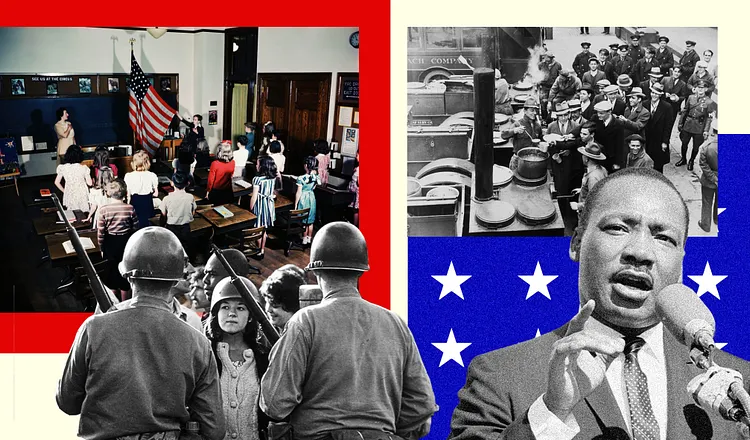
We took it seriously. When the morning bell rang, we’d climb the wide stone steps that led from the playgrounds to the school buildings, hang up our jackets and store our lunch boxes in the cloakroom (why cloak? Had that, too, been explained in first grade?), and then hustle over to our desks for duty. Each week there was a different Pledge of Allegiance monitor, and that person walked importantly to the front of the room and stand beneath the flag. The monitor’s hand was placed (more or less) over the monitor’s heart, a signal for all of us to look alive. A single clap rang out as 22 small hands clapped (more or less) over 22 hearts. The monitor started and we all joined in.
We looked at the flag and said the Pledge, and it was similar to saying prayers you’ve learned by heart. Any single day might not have an effect, but day after day, the words soaked into me. They taught me that I was an American; that America was a good place; and that the flag—our flag—was to be respected.
This wasn’t taking place in some deep red state; this was Berkeley, California, in 1968. All around us, in the city and the country, adults were losing their minds, but up there at Cragmont School, the children were holding it down.
