In Qardaha, in the Alawite lands of Latakia on the Mediterranean, stands the sumptuous and pristine marble mausoleum worthy of an Arab monarch. It is here the founder of the brutal Assad dynasty, Hafez al-Assad, is buried in magnificence.
Assad was not the original family name. Hafez’s grandfather was a powerful character known as Sulayman al-Wahhish—the al-Wahhish meaning the wild beast—for his strength; one of his sons was Ali, another formidable figure, a farmer and leader known for his toughness, he had eleven children; Hafez was his ninth son. His nickname was al-Assad—the Lion—and he adopted that as his family’s name.
Hafez’s chosen heir was his swaggering eldest son, Bassel. Always promoted as the “golden knight” and depicted on horseback, he died young in a car crash and was buried alongside his father, leaving the succession to his younger brother—a gawky, chinless eye surgeon named Bashar. He turned out to be just as murderous as his father.
I have seen no footage yet of the fate of the mausoleum and the bodies that lie there, just as I have seen no footage of Bashar al-Assad as he fled the lightning-fast overthrow of his country. But his father’s and brother’s bodies are unlikely to remain untouched—unless he has taken them with him.
For 53 years, the Assad dynasty ruled Syria with savagery—and with internal family politics that resembled a toxic cross between a Mafia family and the court intrigues of a medieval monarchy, combined with a Stalinist cult of personality. Case in point: When Hafez had a heart attack, his brother and praetorian commander, Rifaat, tried to seize power and was exiled. (It was Rifaat who, in 1982, carried out the massacre of the city of Hama, killing around 40,000 civilians in a few days—a slaughter that still ranks as the bloodiest killing of civilians in modern Arab history.)
When Bashar gained control, he, too, struggled to control a wilder brother, Maher, who ultimately became the murderous enforcer of the regime. The Mafia parallel became even more striking in recent years as the dynasty degraded into an organized crime family selling Captagon across the region.
When the dynasty was faced with the uprisings of the Arab Spring in 2011, the cruelty of the Assad reign changed to barbaric, nihilistic slaughter under the leadership of Bashar Assad, who held power only thanks to the backing of a murderous alliance of Iran, its vassal militia Hezbollah, and Russia. Around 600,000 Syrians were killed as Assad perpetrated by far the worst butchery in the Middle East in modern times, symbolized by the slogan: “Assad or the Country Burns!”
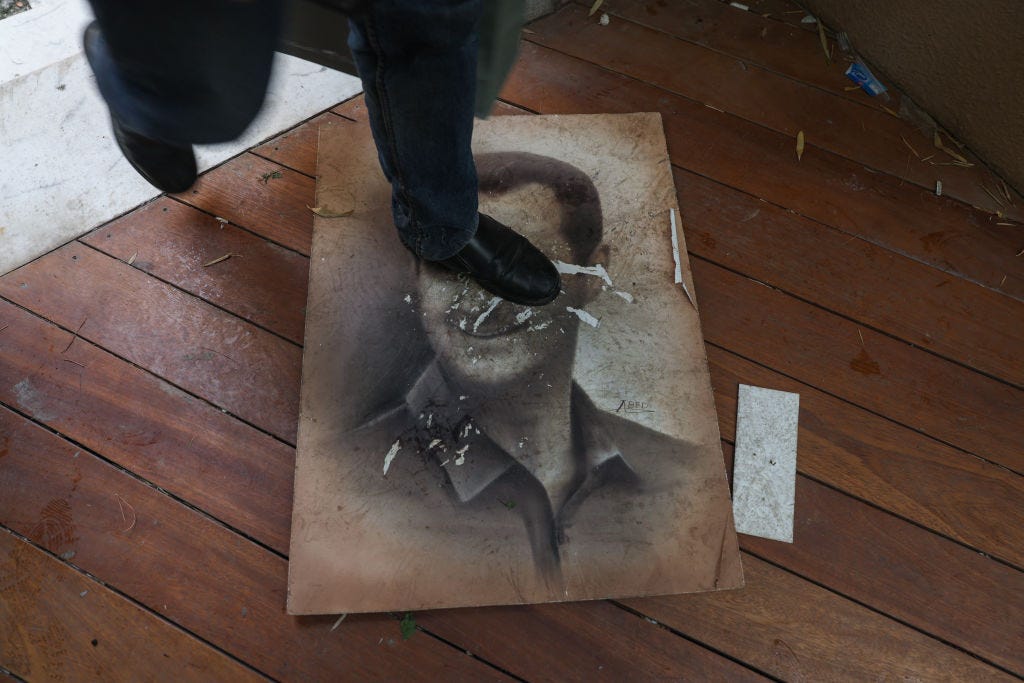
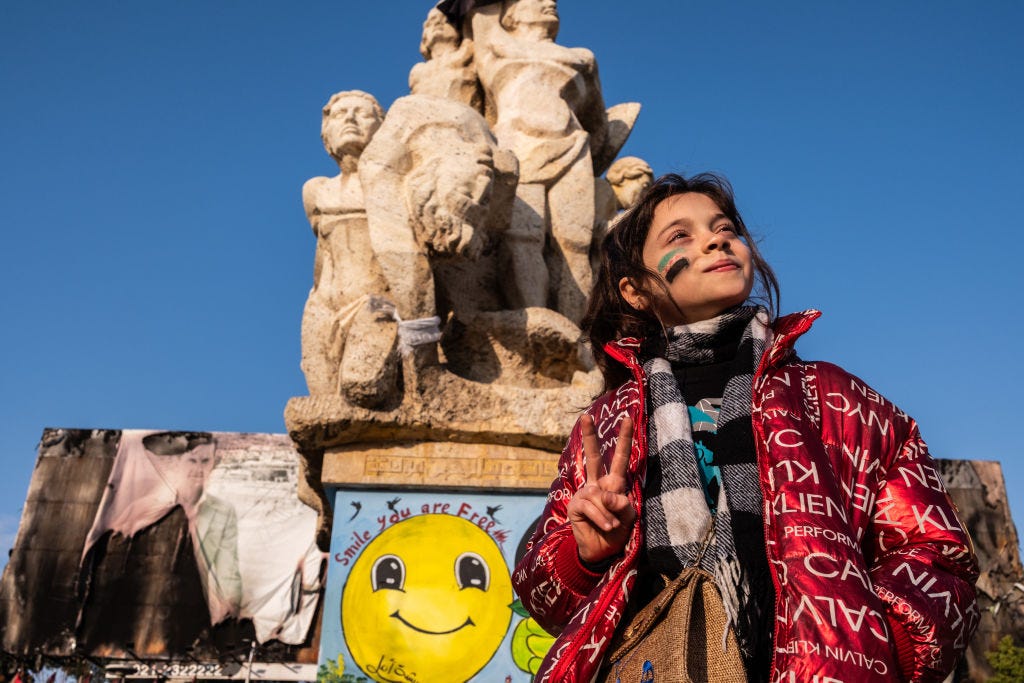
What we have witnessed over the past 48 hours—the toppling of Assad statues in various cities; the opening of the hellish prisons (in which some benighted prisoners had survived for decades); the fleeing of many of the secret police; the departure of Russian and Hezbollah troops; and now the vanishing of the dictator himself—is astonishing. It is impossible to watch the fall of the brutal tyranny of the House of Assad without feeling joy.
But this is the Middle East. Anyone who remembers the Arab Spring knows that things can always get worse. And anyone who studies history knows that predictions are for fools.