


When Tyler Hall finished his tattoo artist apprenticeship in 2012, he got a massive torch inked onto the side of his face. It was his way of “giving thanks to the tattoo industry,” Hall, 34, told me. “It was my dedication. This is where I’m staying, and this is what I love. This is what I want to do for the rest of my life.”
It was not Hall’s first face tattoo. That would be the umbrella under his right eye, which he got a few months before the torch, to “symbolize protection against obstacles in life.” There’s also the script Never Again, over his brow, lyrics borrowed from a song he loved as a teen. Also: a crescent moon, the word restless on his cheek, and a long-stemmed rose under it, in honor of his daughter, whose middle name is Rose.
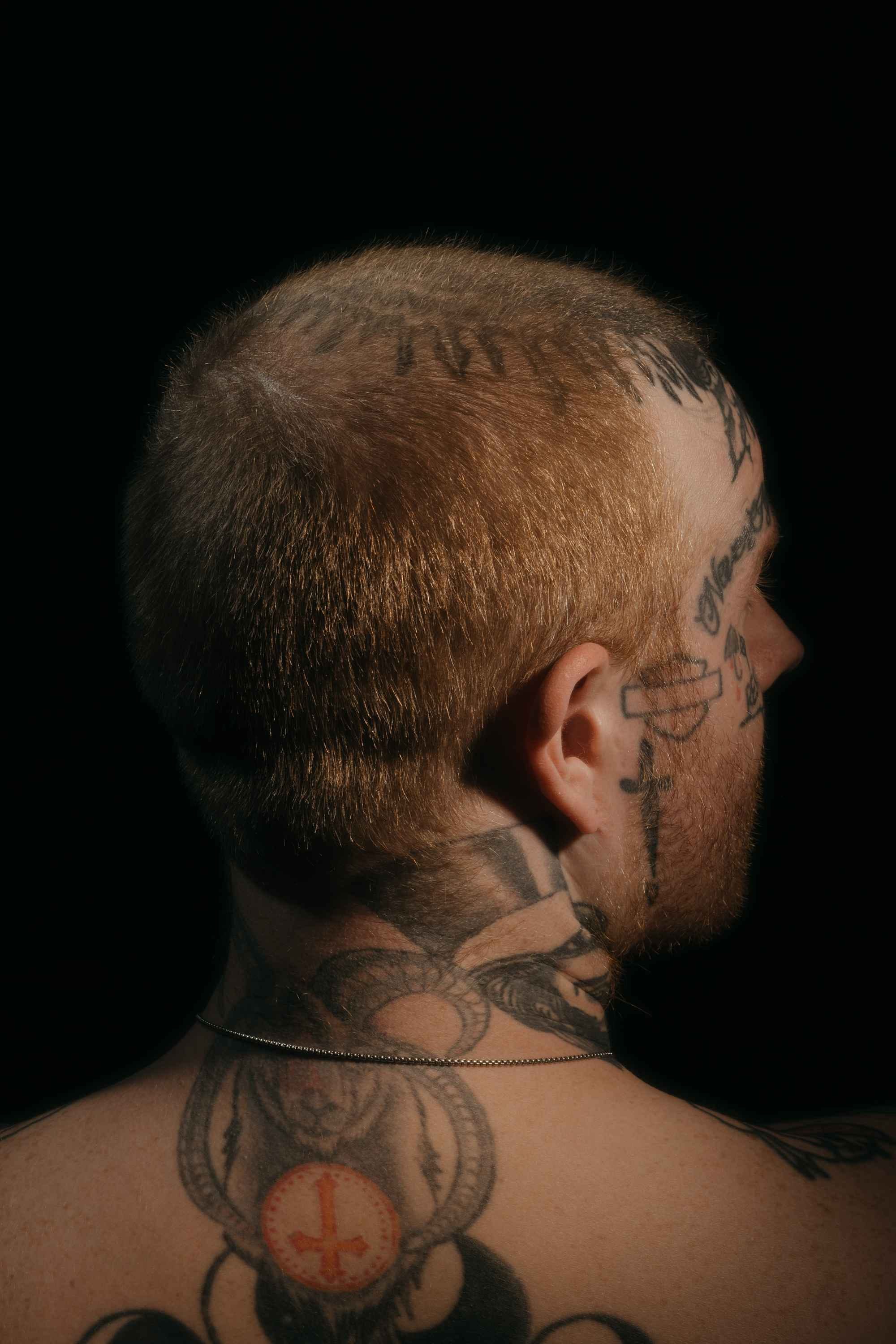
All told, “I’ve got about seven or eight face tattoos right now,” he said. Does he have plans to get more face tattoos? “Not necessarily,” he said. “But you never know.”
Hall tells me his face tattoos act as a “bold statement of individual expression,” and that he enjoys the big reactions they get; sometimes it’s judgment by strangers turned off by them—and by extension by him—and sometimes it’s people who “are shocked to realize behind the rough exterior is a kind, God-fearing soul.”
But because Hall works in Clover, South Carolina—he’s a contractor at The Local Tattoo Studio—he may never know the satisfaction of inking another man’s forehead. That’s because he is subject to his state’s very strict and specific laws concerning where (geographically and dermatologically) you can get a tattoo. South Carolina officially legalized tattoos in 2004, but the law stipulates that a tattoo shop can’t be within 1,000 feet of a playground, a church, or a school—and bars tattoo artists anywhere in the state from inking anything above a client’s shoulders. The penalty for breaking the law, which falls on the artist, goes up to a $2,500 fine or one year in prison, or both.
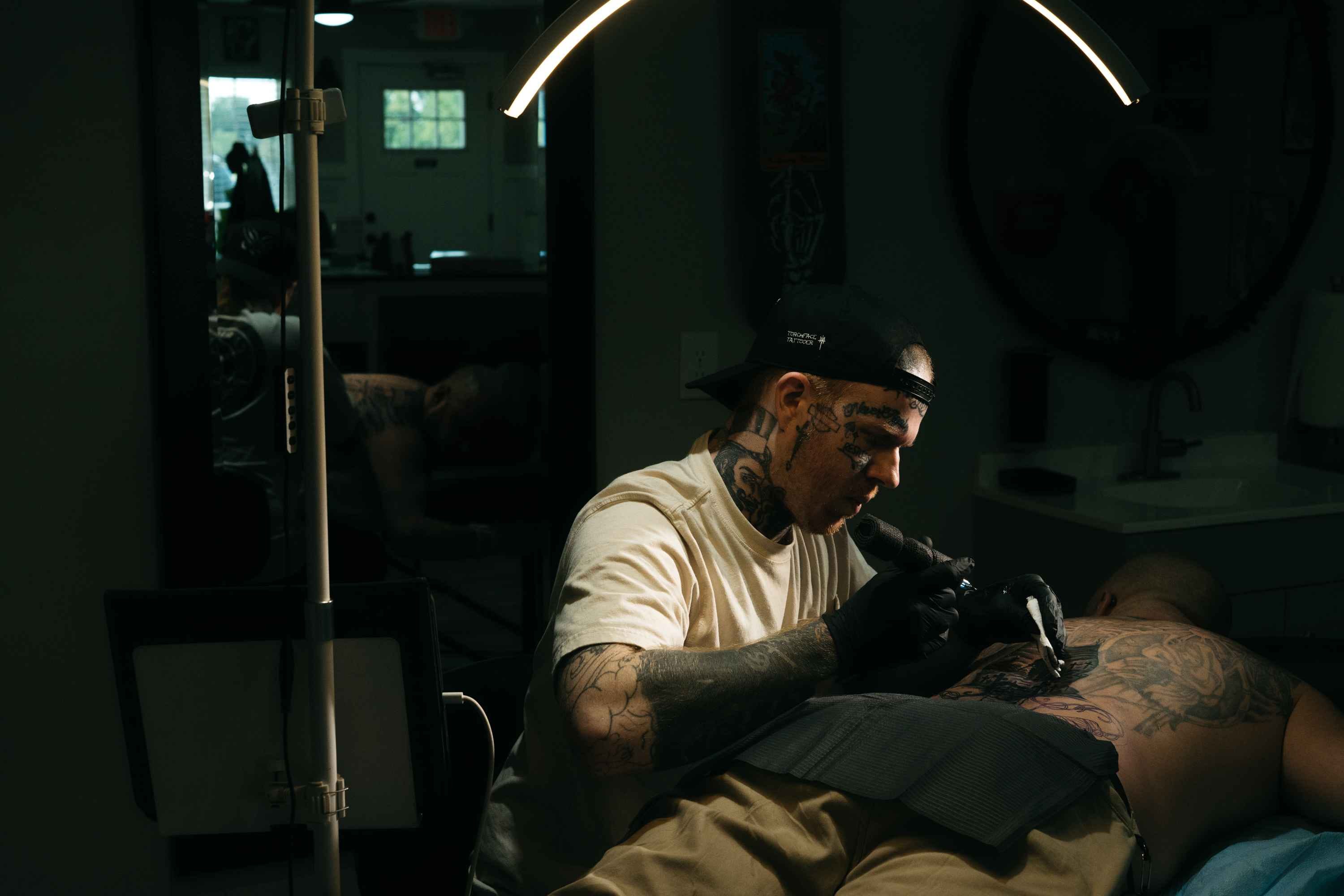
Hall tells me he has to turn down clients “all the time” who come in requesting a tattoo on their head, face, or neck. “We’re turning money away.” He advises these clients to drive the few miles to nearby North Carolina to get the job done—which is exactly what he did to procure his beloved face tattoos. “There’s a clientele that has to go across state lines just for them to be able to express their First Amendment.”
Now, South Carolina’s draconian tattoo restrictions are being challenged, on constitutional grounds, by a lawsuit filed last month. The plaintiffs are two South Carolina residents who say they’d like to get more tattoos, plus a New York City-based tattoo shop, Tiny Zaps, which wants to do business in the state, and says its laws prevent them from doing so.
