


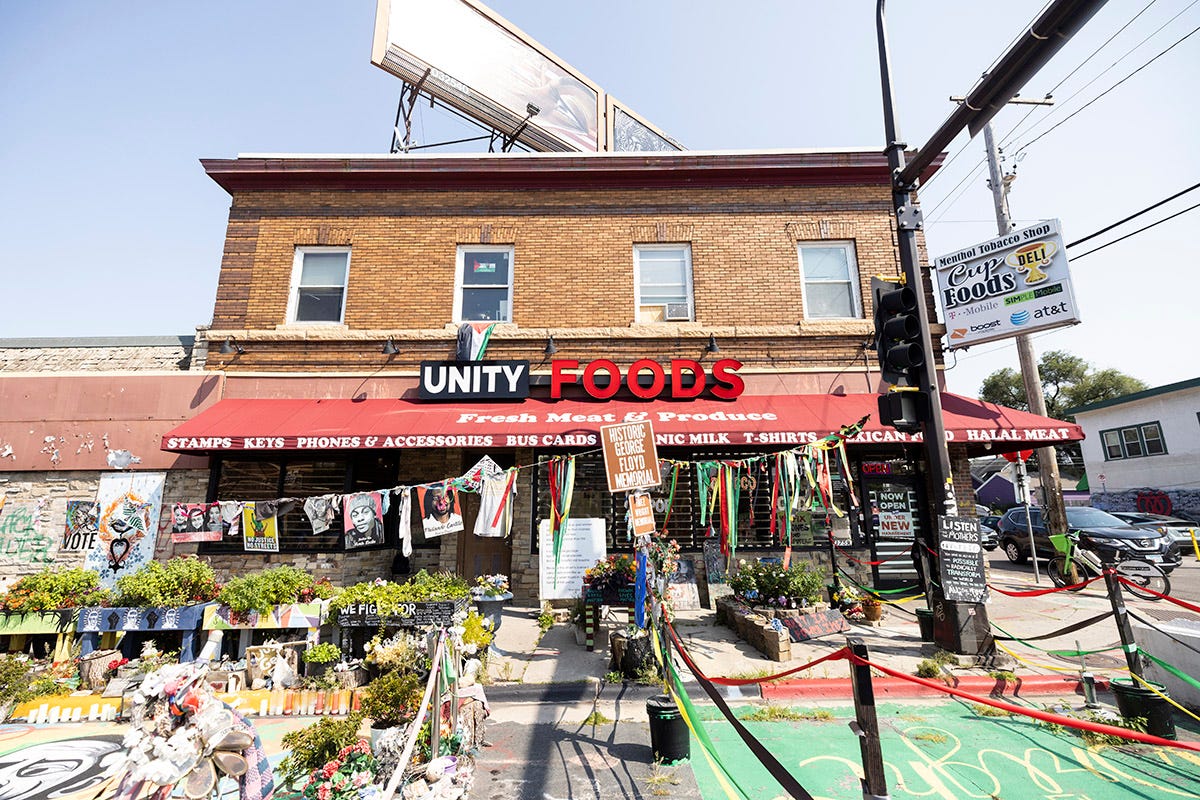
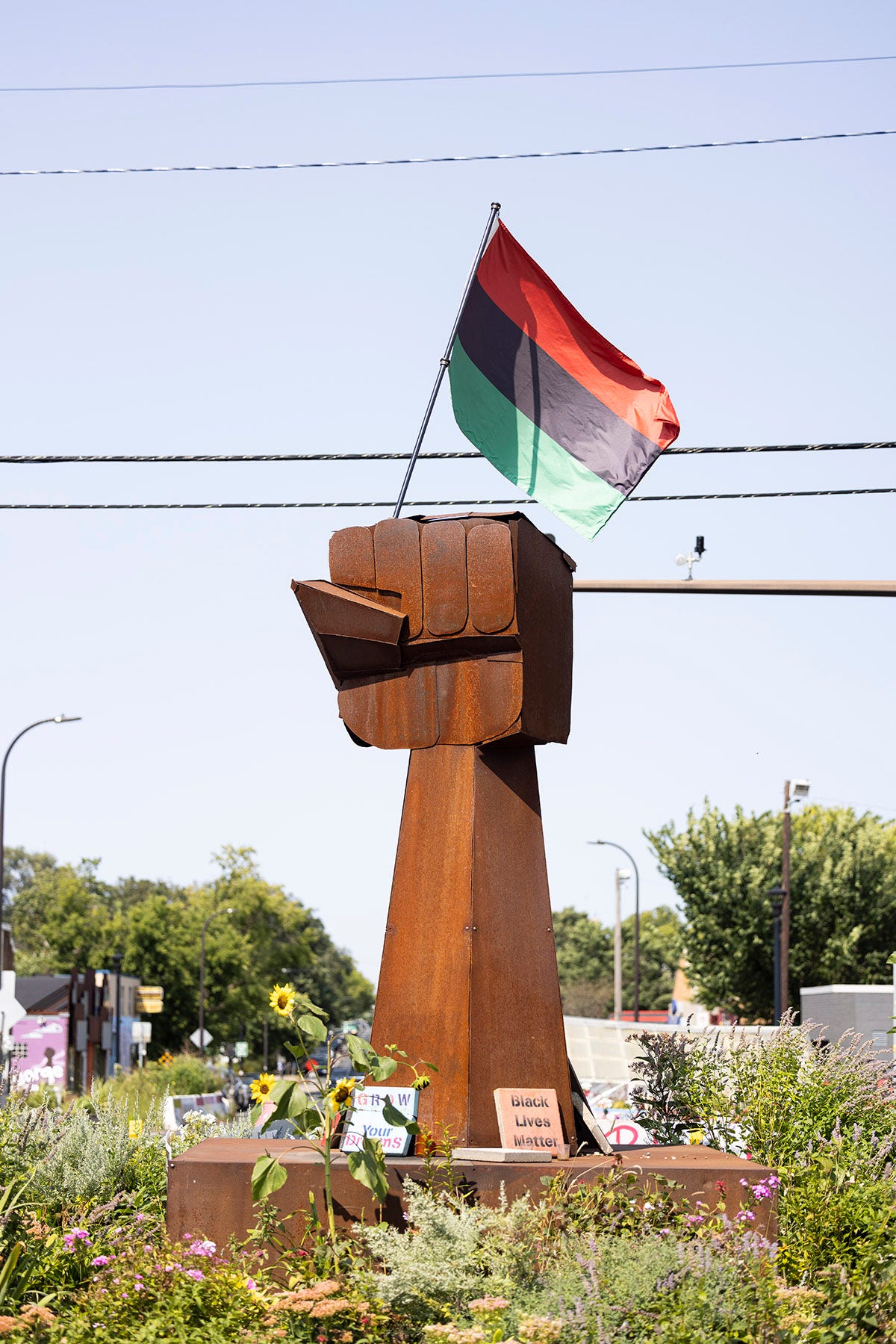
MINNEAPOLIS—Four years after the murder of George Floyd, the site where he died looks like a shrine. Cup Foods, where Floyd bought cigarettes with a counterfeit twenty-dollar bill, leading to his arrest by Minneapolis police, is under new management and has been renamed Unity Foods. The curbside in front of the store, where Officer Derek Chauvin kneeled on Floyd’s neck, is filled with planter boxes sprouting wildflowers. The torched gas station across the street has become an open-air community meeting space, and the nearby intersection is now a roundabout encircling a metal statue of a raised fist. Everywhere, murals and hand-painted signs celebrate Black Lives Matter.
About three miles away, the 3rd Precinct, the Minneapolis police headquarters that was torched by protesters during the 2020 riots, stands empty, barricaded by a chain-link fence with barbed wire. Signs in the windows of a bookstore next door mimics Dr. Seuss’s Green Eggs and Ham: “We do not want your precinct here! Nor there! We do not want it anywhere!”
Over the course of the Minneapolis riots, hundreds of buildings were burned, vandalized, or looted. It amounted to half a billion dollars in damage. “It’s really sad to see my neighborhood today,” said Anna Brejle, a white woman in her 40s who lives about three blocks from the 3rd Precinct building and who participated in the protests.
Why did it take three days after Floyd was killed for the state of Minnesota to send in the National Guard to quell the violence and destruction? It’s a question that the people of Minneapolis are still asking. And now it has become a national question—and a Republican attack line—ever since Tim Walz, Minnesota’s governor then and now, became the Democratic candidate for vice president.
